
Daily Check-In Calls for Seniors Living Alone
A daily check-in service for seniors calls at a set time and alerts someone if the call goes unanswered. Free programs may be offered by local agencies or volunteers, but schedules and alert rules vary. Paid programs often let families choose call times and set up alerts to multiple contacts.
Start by asking one question: Who gets notified if your parent does not answer, and how soon? The answer matters more than extra features, especially if your parent wants a simple phone call without a new device.
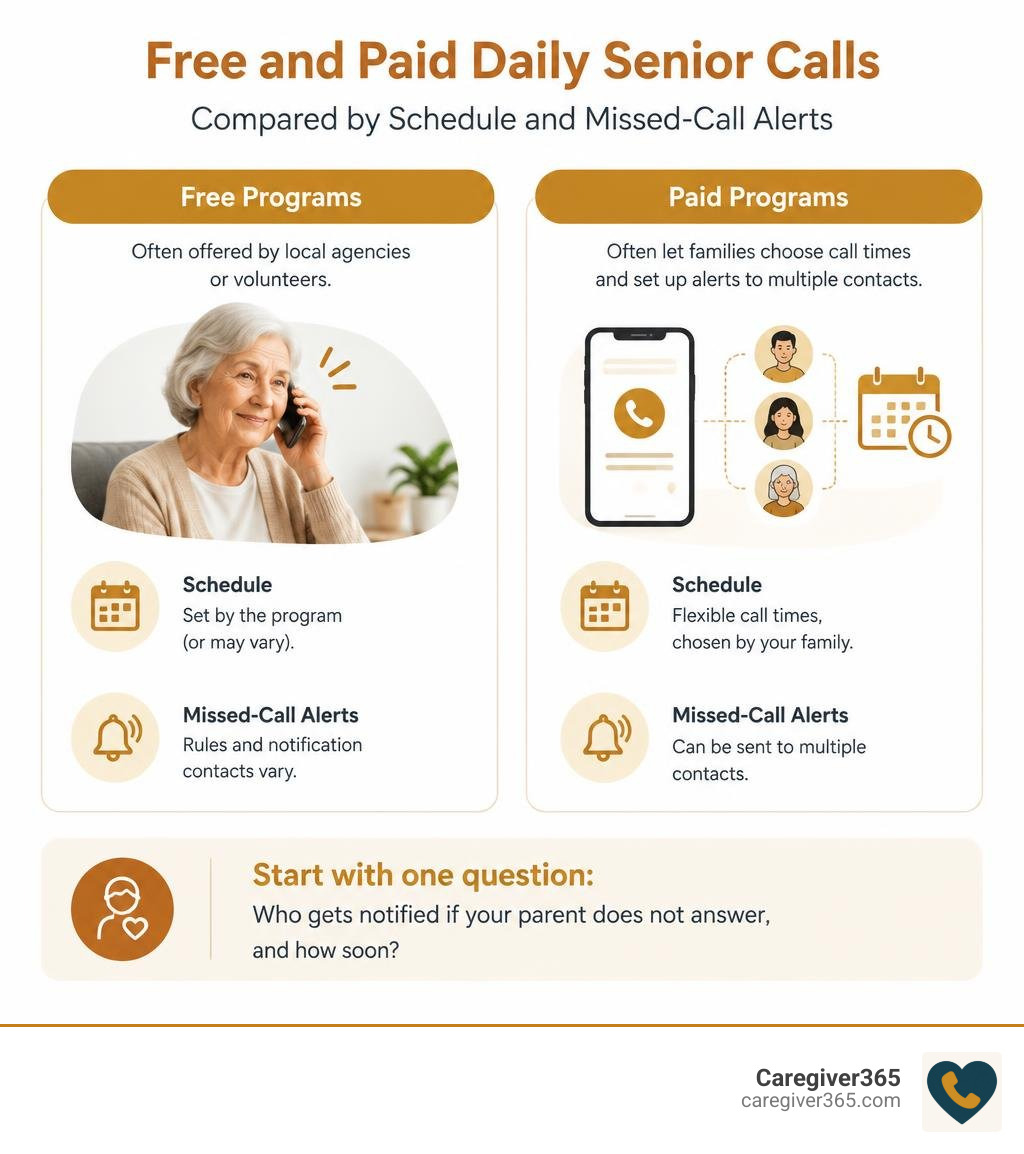
Finding the right check in service for elderly family members often begins with understanding how a senior well being check can offer consistent reassurance for independent living.
Understanding How Check-in Programs Protect Independent Seniors
Aging in place is a primary goal for many older adults, yet living alone introduces genuine safety and wellness challenges. When an aging parent lives independently, family members often carry an unspoken worry throughout the workday: Did Mom wake up feeling well? Did Dad get out of bed safely?
Routine check-ins serve as an essential safety net that bridges independent living with family reassurance. Learning why checking in on aging parents is essential highlights the balance between autonomy and safety. Rather than waiting for a crisis to occur, regular contact establishes an early warning system.

A structured daily phone call accomplishes several vital safety goals:
- Immediate emergency detection: If an accident occurs overnight, a morning check-in ensures that hours or days do not slip by before someone notices.
- Support for cognitive routines: Regular calls provide daily structure, anchoring morning habits and medication schedules.
- Combating isolation: Simple, predictable contact reminds seniors that someone is looking out for them every single day.
- Family peace of mind: Caregivers can focus on work and personal responsibilities knowing they will receive an immediate alert if a call goes unconfirmed.
Daily calls fit naturally alongside comprehensive senior safety solutions, creating multiple layers of protection without compromising dignity or independence.
Comparing Free vs. Paid Options for a Check In Service for Elderly
When families explore the right check in service for elderly parents, they generally weigh free community resources against dedicated, paid automated systems. Both models provide essential support, but their operational structures, customization options, and emergency escalation protocols differ significantly.
To help you decide which path aligns best with your family’s routine and budget, here is a direct comparison of how free and paid services operate:
| Feature / Capability | Free Community & Volunteer Programs | Paid Automated Check-In Services |
|---|---|---|
| Typical Cost | $0 / Free (funded by grants, donations, or local taxes) | Low monthly subscription (typically $10–$25/month) |
| Call Timing | Fixed operating windows (e.g., weekdays only between 8:00 AM – 10:00 AM) | Fully customizable (specific hours, 7 days a week, 365 days a year) |
| Escalation Protocol | Often escalates to local non-emergency dispatch or a single designated contact | Multi-tiered alerts to an entire family “Care Circle” via SMS, email, and phone |
| Missed Call Redials | Limited redial attempts due to volunteer capacity | Automated, systematic redials spaced at defined intervals |
| Hardware Needed | Standard landline or basic cellular phone | Any standard landline or mobile phone (zero equipment to install) |
| Weekend & Holiday Coverage | Frequently paused on weekends, county holidays, and severe weather days | Uninterrupted 365-day operation |
| Family Dashboard & History | Rarely available; updates communicated informally | Real-time status logs, app/web dashboards, and instant caregiver notifications |
Choosing a Free Check In Service for Elderly Communities
Free telephone reassurance programs provide a valuable community service, often managed by Area Agencies on Aging (AAA), local police or sheriff departments (frequently branded as “Are You OK?” or “RUOK” programs), and volunteer-led senior organizations.
These programs offer distinct advantages:
- Zero Financial Barrier: They ensure that every senior, regardless of financial means, has access to basic welfare monitoring.
- Community Touchpoint: When calls are conducted by volunteers, they can offer a brief moment of neighborly warmth and social conversation.
- Local Authority Coordination: Police-sponsored programs can quickly coordinate with local emergency personnel if a senior fails to check in.
However, free options also have operational constraints:
- Strict Scheduling Windows: Volunteer networks and municipal servers usually operate during fixed hours, leaving little flexibility if your loved one prefers an evening call or sleeps late.
- Coverage Gaps: Many civic programs do not operate on weekends or regional holidays.
- Single-Contact Escalation: If a call goes unanswered, these systems often notify only one emergency contact before dispatching emergency services. In cases where a parent simply stepped into the garden, this can result in an unnecessary emergency response. For situations requiring immediate municipal assistance, families can consult resources on requesting an official welfare check by phone.
Upgrading to a Paid Check In Service for Elderly Loved Ones
Paid daily check-in services use automated phone technology to provide reliability, flexibility, and complete family visibility. We built our Caregiver365 platform around these core needs, ensuring aging adults can maintain their normal daily routines without complex equipment.
Key benefits of an automated, subscription-based service include:
- Customizable Schedules: Families choose the exact time call checks occur, adjusting for time zones, wake-up routines, or midday medication schedules.
- Distributed Care Circle Alerts: When a call is missed, our system does not rely on a single person’s phone. It alerts an entire Care Circle of up to eight family members, neighbors, or trusted friends simultaneously via text message, email, or automated call.
- Multi-Attempt Verification: Paid platforms use intelligent redial logic. If a line is busy or unanswered on the first attempt, the system retries several minutes later before escalating to the Care Circle.
- Universal Compatibility: No broadband internet, wearables, smart home hubs, or mobile apps are required on the senior’s end. The service works seamlessly on any basic landline or mobile phone.
Understanding how automated daily check-in calls work gives families confidence that their loved one is protected every day of the year. For an overview of top options, explore the best automated daily check-in systems that connect seniors and families.
Evaluating Safety Calls for Senior Independence
Introducing safety measures can sometimes trigger resistance from aging parents who cherish their autonomy. Many seniors worry that accepting help signals a loss of independence or opens the door to invasive monitoring.

Daily telephone check-ins offer a non-intrusive way to stay connected without constant supervision. A few qualities make this approach especially appealing for independent seniors:
- No Stigma: Answering a ringing phone is an everyday habit, unlike wearing a device that constantly signals vulnerability.
- Zero Charging or Maintenance: A phone check-in relies on the household phone your loved one already uses every day, so there is nothing new to charge or maintain.
- Proactive vs. Reactive Safety: An automated call is proactive: if the senior cannot reach the phone due to a fall or sudden medical event, the missed call automatically initiates a family alert, rather than waiting for the senior to take action themselves.
For seniors who already utilize in-person support, daily phone calls serve as an affordable, daily complement between scheduled home visits.
Frequently Asked Questions About Senior Check-in Services
How do daily check-in calls handle missed answers?
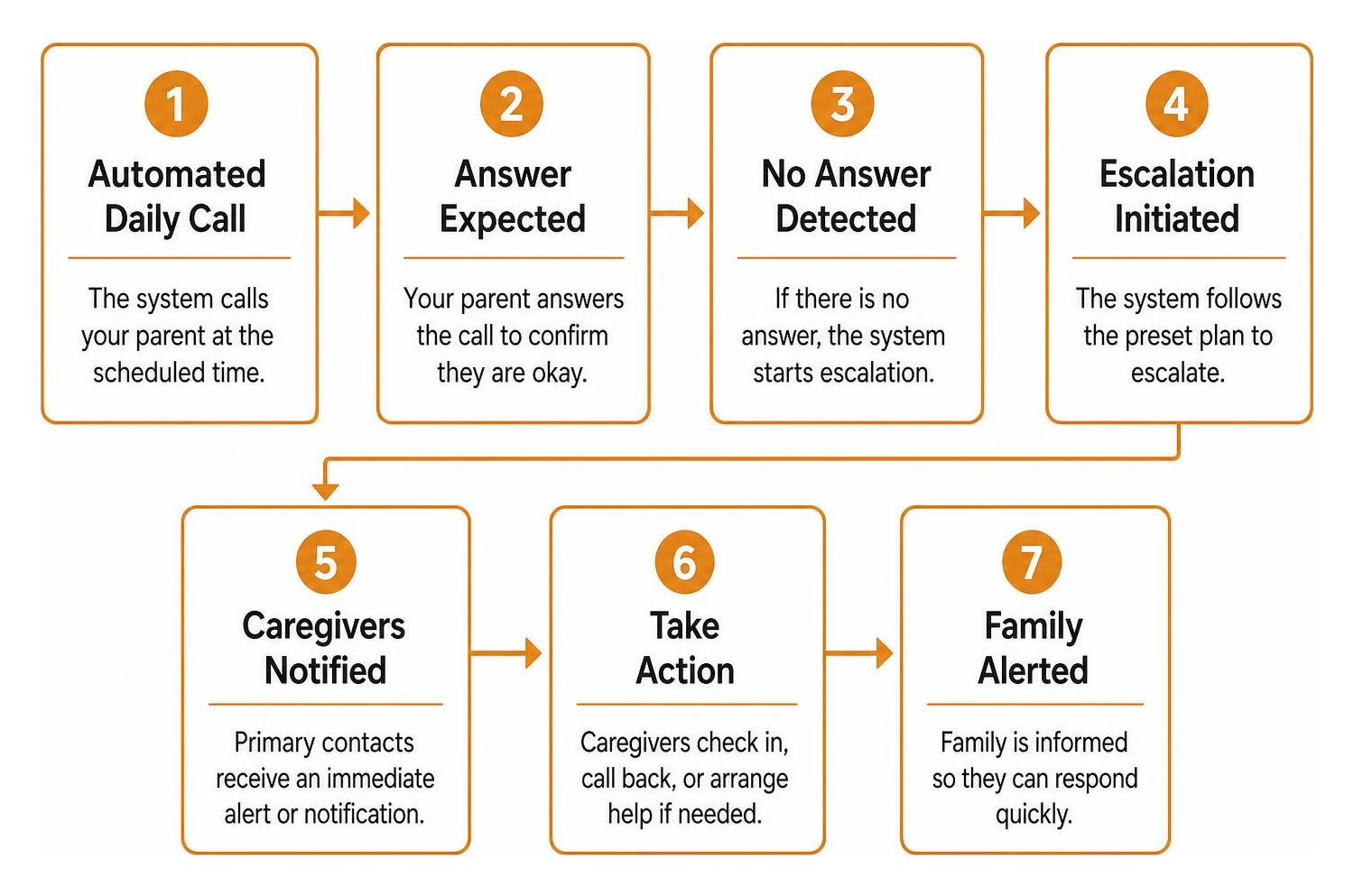
When a senior does not answer their scheduled call, automated platforms initiate an escalation protocol:
- Immediate Retry: The system redials the number after a short window (e.g., 5 to 10 minutes) to account for brief delays, such as answering the door or using the restroom.
- Care Circle Notification: If the follow-up attempt fails, the platform sends alerts to designated family members and caregivers.
- Family Coordination: Care Circle members can quickly check in with one another, call a neighbor with a spare key, or visit the home directly.
This multi-step approach prevents false alarms while ensuring prompt action during a genuine emergency. Knowing when to request professional wellness checks helps families determine when to transition from a phone check to on-site municipal assistance.
Can daily check-in programs assist with home fall prevention?
While a phone call cannot physically stop a slip or trip, morning check-ins significantly reduce the dangerous “long lie”—the period a fallen senior spends immobilized on the floor before help arrives.
Long floor stays can lead to dehydration, pressure injuries, hypothermia, and severe psychological distress. By scheduling a daily check-in call shortly after a parent’s typical wake-up time, families ensure that an overnight fall is identified within hours rather than days. Pairing proactive calls with practical room-by-room senior fall prevention strategies creates a safe, sustainable home environment.
Do safety calls require special equipment or internet?
No. Automated daily check-in programs operate over standard public telephone networks. Your loved one can answer calls using:
- A traditional copper landline
- A digital VoIP home phone
- A basic flip phone
- A modern smartphone
There are no base stations to plug in, no Wi-Fi networks to configure, and no batteries for your parent to recharge. For families navigating aging care, exploring our broader collection of senior care articles provides actionable guidance for every stage of the journey.
Conclusion
Supporting an aging loved one’s desire to live independently should not require constant worry for long-distance caregivers. Daily safety calls deliver a simple, dignified solution: seniors continue their daily routines undisturbed, and families receive regular reassurance that all is well.
Whether you start with a free local reassurance program or choose the customizable reliability of an automated service, regular check-ins provide an essential layer of protection for aging in place.
Discover how Caregiver365 provides reliable, automated daily phone check-ins that work on any landline or mobile phone, alerting your entire Care Circle to keep your loved ones safe every single day.