
Finding the Best Daily Check-In Service for Seniors Living Alone
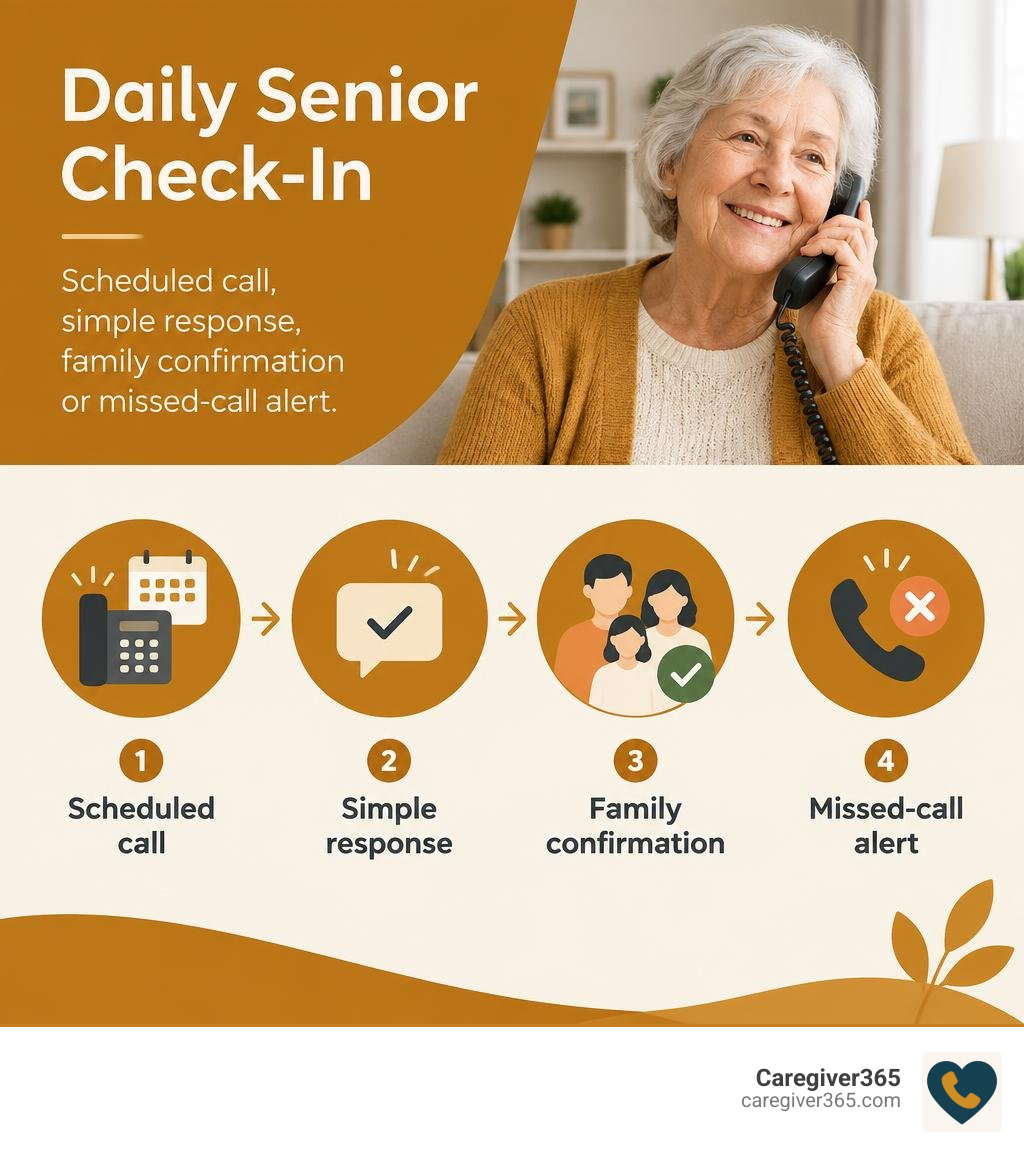
For a senior who prefers a familiar phone, an automated daily call is often the best place to start. Look for a service that works on a landline or mobile phone, asks for a simple response, and alerts family when a check-in is missed. Medical alert devices serve a complementary need: letting someone call for help right away during an active emergency.
Before choosing, compare call schedules, how long the service waits for a response, who gets alerted, and what it costs. Most important, make sure someone in the family knows what to do when an alert arrives. A well-designed check-in routine also helps reduce social isolation, because the senior knows a familiar voice prompt will arrive at the same time each day and that a family member will notice if something seems wrong.
Best daily check-in service for seniors vocabulary:
- elderly check in for families
- free daily check in calls for seniors
- wellness checks for seniors
How Modern Check-In Systems Protect Seniors Living Independently

Aging in place allows older adults to remain in familiar surroundings while maintaining their daily independence. However, living alone can create lingering concerns for family members who balance work, children, and long-distance caregiving. If an unexpected fall or sudden health change occurs, hours or even days might pass before anyone notices.
A structured check-in system bridges this gap. Integrating daily check-in routines into a loved one’s morning schedule creates an unobtrusive safety net. When families establish predictable touchpoints, they mitigate the risk of prolonged distress after an accident while respecting the senior’s autonomy. Understanding these layers of protection is a foundational step in exploring the definitive guide to senior safety solutions.
Why Automated Calls Deliver the Best Daily Check-In Service for Seniors
While wearable gadgets and sensor networks exist, technology is only effective if an older adult actually uses it. Wearable pendants often get left on nightstands, and smart apps frequently run into forgotten passwords or uncharged batteries.
Automated phone calls solve this problem by leveraging existing household routines. Whether your loved one uses a classic corded landline or a modern mobile phone, answering a ringing telephone requires no new digital learning. By delivering a clear voice prompt at a scheduled time every day, the best automated daily check-in systems that connect seniors and families confirm safety within seconds—without installing bulky hardware or changing internet providers.
Integrating Check-In Calls With Existing Safety Plans
Daily check-in calls are not meant to replace emergency alert systems; rather, they serve as a proactive verification system. Understanding check-in calls vs a medical alert button clarifies the difference: an emergency pendant requires a senior to be conscious and capable of pushing a button during a crisis, whereas a scheduled check-in asks, “Are you up and doing well today?”
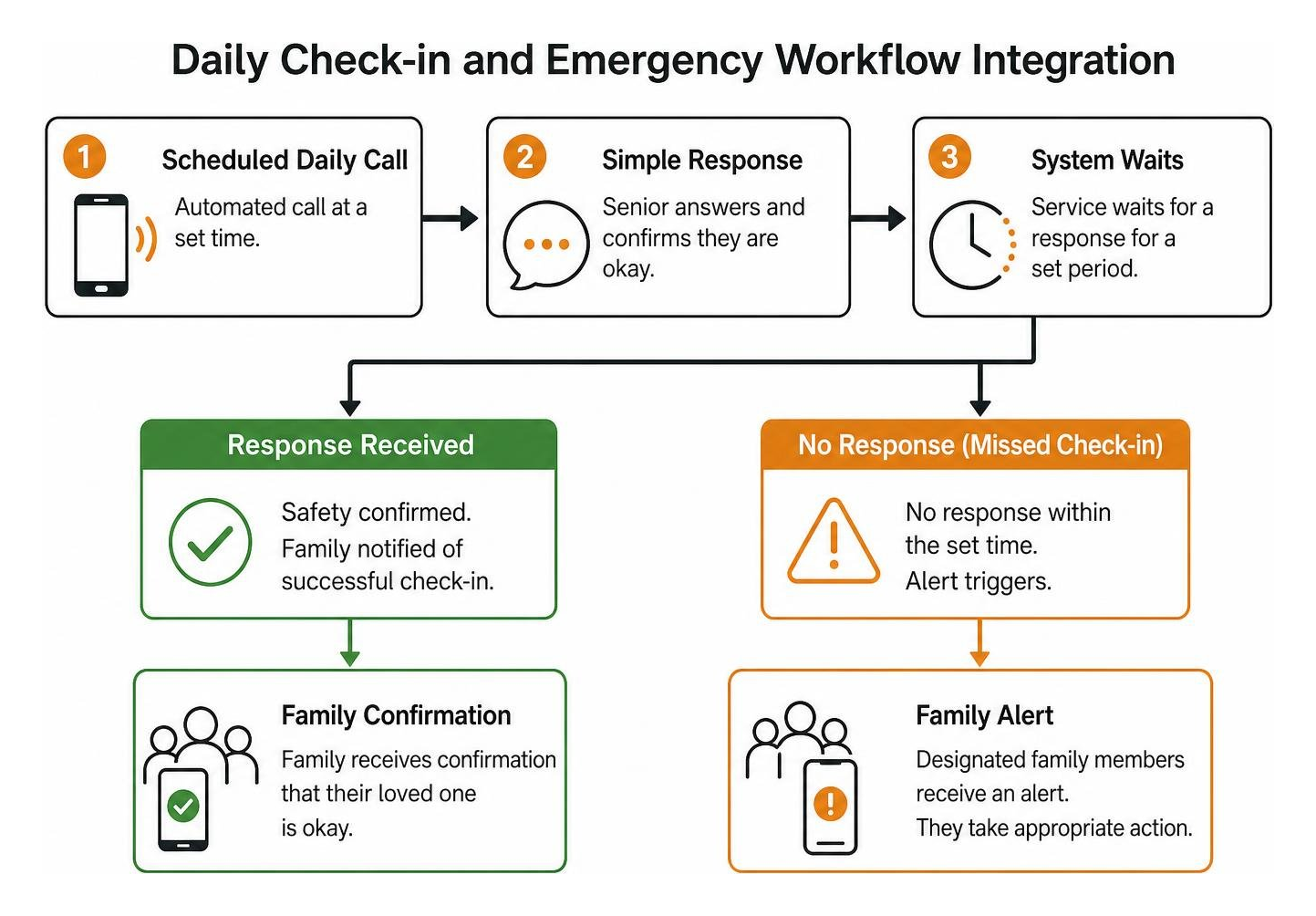
When paired with existing medical alert devices, automated calls create a complete safety loop. To see how these components interact smoothly, you can explore how daily check-in calls work to coordinate voice prompts with immediate caregiver notifications.
Key Features to Look for in the Best Daily Check-In Service for Seniors
Finding the right service requires looking at operational reliability, flexibility, and how notifications reach family members. The table below outlines the core features to evaluate when comparing solutions:
| Feature Category | Basic Check-In Tools | Purpose-Built Senior Services |
|---|---|---|
| Device Compatibility | Smartphones / Apps only | Any Landline or Mobile Phone |
| Response Method | Complex app navigation | Single-button press (e.g., Press ‘1’) |
| Escalation Path | Single contact notification | Multi-tiered Care Circle (up to 8 contacts) |
| Hardware Required | Base stations, internet hubs | None |
| Setup Time | Days (shipping & setup) | Under 5 minutes |
Multi-Caregiver Escalation and Family Circles
A check-in service is only as reliable as its notification network. If an alert goes to a single family member who happens to be in a meeting, driving, or out of cell range, critical response time is lost.
Purpose-built platforms utilize a “Care Circle” model that notifies multiple caregivers simultaneously via automated calls, text messages, or emails. Families can also set up instant missed call reminders in under two minutes to ensure that repeated unanswered calls trigger an immediate escalation sequence across siblings, neighbors, or designated primary responders. According to the National Institute on Aging, aging in place requires planning for exactly this kind of coordinated support, so that no single caregiver becomes a bottleneck.
Privacy, Security, and Administrative Efficiency
Maintaining personal privacy and data security is paramount when coordinating care for older adults. Reputable check-in platforms avoid complex invasive monitoring, focus strictly on wellness confirmations, and use encrypted channels to manage contact information. This streamlined approach keeps the administrative burden low for families while ensuring contact details and schedules remain protected.
How Purpose-Built Daily Check-In Workflows Support Senior Safety
Generic software—such as medical clinic patient portals or community event check-ins—focuses on processing walk-ins, badge printing, and co-pay collection. In contrast, senior-specific workflows focus on cognitive simplicity, zero hardware barriers, and intelligent retry logic to avoid false alarms.
Overcoming Technology Barriers for Older Adults
Many seniors feel frustrated by touchscreen menus, unexpected operating system updates, or small fonts. Purpose-built check-in services eliminate these pain points:
- No App Downloads: The system functions entirely over standard voice networks.
- Simple Keypad Prompts: Answering the call and pressing a single key (such as “1”) confirms safety.
- Hearing-Friendly Audio: Clear, unhurried voice prompts provide an easy-to-understand experience.
- Familiar Routines: Receiving a call at 9:00 AM matches existing morning routines like having coffee or reading the news.
Purpose-Built Senior Safety Workflows
When a check-in call is missed, smart workflow logic prevents unnecessary panic. If a senior is simply in the garden or taking a shower, the system automatically waits a pre-set window (such as 10 to 15 minutes) and calls again. Only after multiple unsuccessful attempts does the platform trigger an escalation alert to the Care Circle. This intelligent retry protocol minimizes false alarms while ensuring real emergencies receive immediate family attention. The result is a daily safety routine that feels less like surveillance and more like a standing morning hello, which is why many families describe it as a natural extension of their existing caregiving rhythm.
How to Choose the Right Daily Check-In Solution for Your Loved One
Every family dynamic is unique, and selecting the right setup involves balancing schedule needs, loved one mobility, and caregiver availability.
Evaluating the Best Daily Check-In Service for Seniors for Independent Living
When reviewing options, consider the following checklist:
- Customizable Call Windows: Can you set the call for a specific time that aligns with your loved one’s wake-up schedule?
- Caregiver Capacity: Does the service allow you to add multiple emergency contacts without extra fees?
- Standalone Simplicity: Can the service operate without home Wi-Fi or expensive proprietary hardware?
Families can directly compare different service plans and features to identify the configuration that best matches their loved one’s daily routine.
Planning for Consistent Daily Check-Ins
Consistency builds peace of mind. Choose a time window when your loved one is reliably near their phone. Discuss the plan with them so they know what the automated prompt sounds like and feel confident responding. Once established, this brief daily interaction becomes a seamless, reassuring part of their morning.
Frequently Asked Questions About Daily Senior Check-Ins
How does an automated daily check-in call confirm a senior is safe?
The service places an automated call at the selected time. When the senior answers, a friendly voice prompt asks them to confirm they are okay by pressing a button on their phone keypad (such as “Press 1”). Once pressed, the system logs the successful check-in and immediately sends a confirmation to the family.
What happens if a senior misses their daily check-in call?
If the phone is not answered or the keypad prompt is not completed, the system initiates a retry sequence shortly after. If the call remains unanswered after scheduled retries, the platform alerts the entire Care Circle via SMS, phone call, or email so family members can follow up directly.
Can check-in services work on standard landlines without internet?
Yes. Purpose-built check-in services operate over standard telecommunication networks. They work reliably on traditional landlines, VoIP lines, and basic cell phones without requiring home Wi-Fi, broadband connections, or smartphone applications.
Conclusion
At Caregiver365, we believe maintaining independent living should never come at the expense of family peace of mind. Our automated daily phone check-in service connects seniors to a multi-caregiver Care Circle using the standard phones they already know and trust. With zero hardware to install and support for up to eight caregivers, staying connected has never been easier. Discover how daily check-in calls work and give your family the confidence that your loved one is safe every single morning.