
Find Free Daily Check In Calls for Seniors Near You
Free daily check in calls for seniors may be available through local police or sheriff’s departments, county aging offices, state programs, and community senior services. Start by calling your local police department’s non-emergency number or your Area Agency on Aging to ask whether they offer a telephone reassurance program.
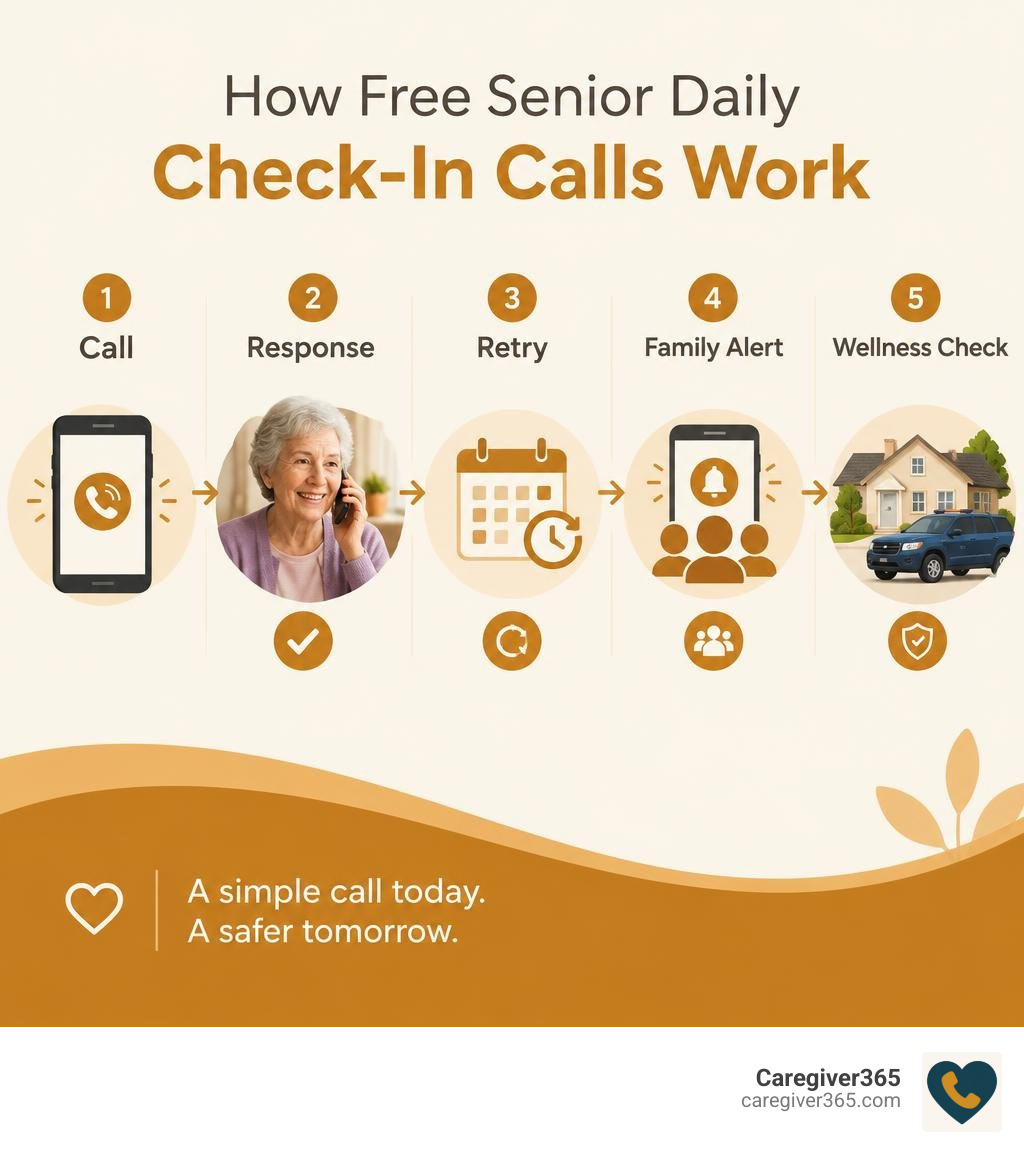
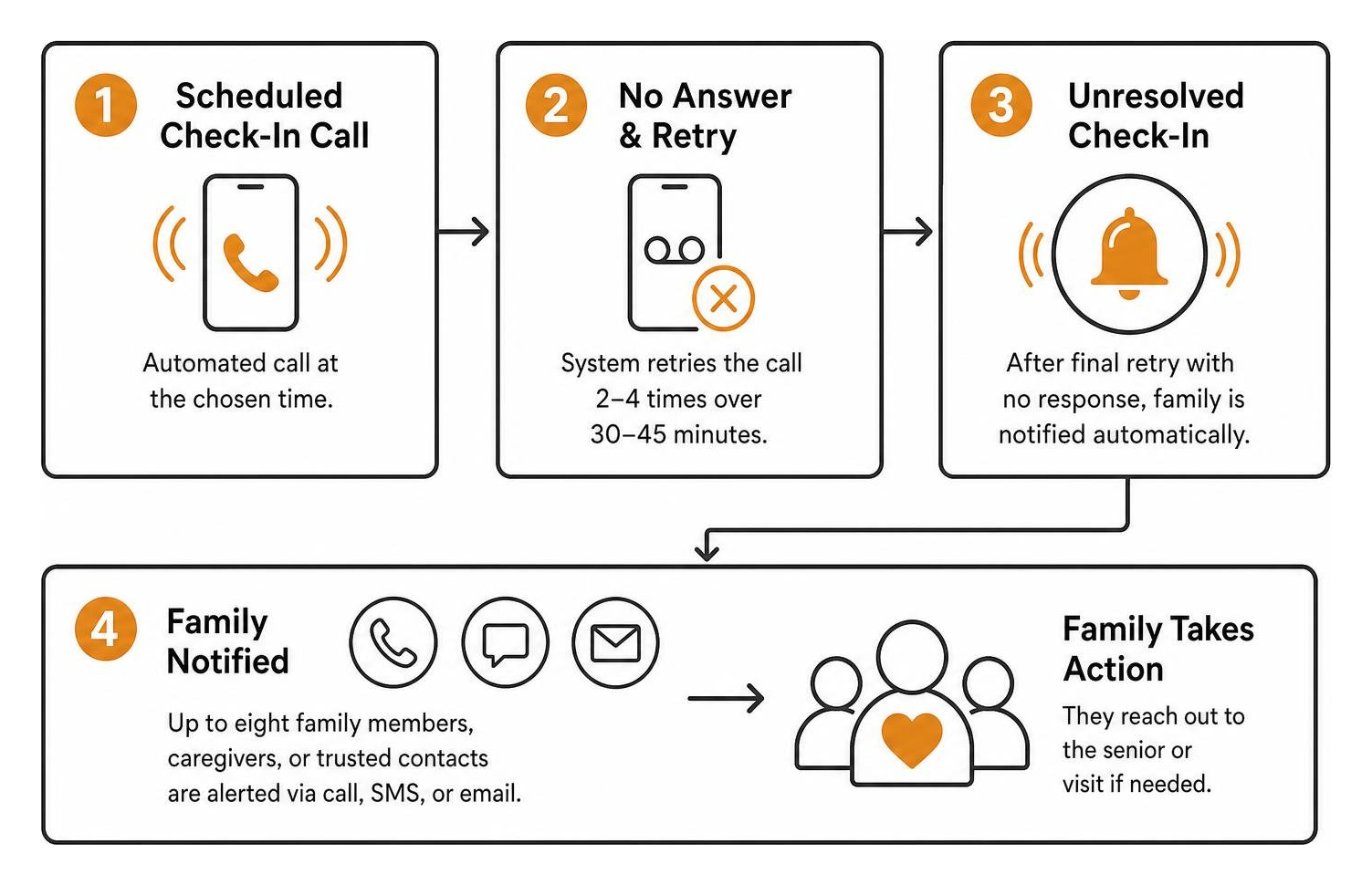
These programs usually place an automated call at a scheduled time. If your parent does not answer after the program’s retry process, the service may alert listed family contacts and, in some communities, arrange a wellness check.
For families, this can be a simple safety net for an older adult who lives alone, especially when everyone cannot call every day. It is not a replacement for 911 or a medical alert device during an active emergency. But it can help ensure a missed call does not go unnoticed for too long. According to the National Institute on Aging, regular social contact and safety monitoring can support older adults who wish to remain independent at home.
Handy free daily check in calls for seniors terms:
Types of Free Daily Check In Calls for Seniors Available Today
With approximately 14 million seniors living alone across the United States, maintaining a reliable daily connection is one of the most effective ways to preserve independence while protecting personal safety. It helps to understand why it is important to check in on seniors every single day: a quick morning confirmation bridges the gap between total independence and emergency isolation.
Not all phone programs operate the same way. Some prioritize emergency safety escalation, while others focus on easing loneliness through casual conversation.
| Program Type | Primary Goal | Delivery Method | Escalation Workflow | Best Suited For |
|---|---|---|---|---|
| County Reassurance Programs | Safety & rapid emergency response | Automated phone calls | Retries, alerts family, dispatches local police if needed | Seniors living alone without nearby family |
| State Aging Initiatives | Daily safety confirmation | Automated interactive voice response | Notifies designated family or community liaisons | Solo agers in participating state regions |
| Volunteer Companionship | Social connection & emotional wellness | Live volunteer phone chats | Reaches out to alternate contacts if calls go unanswered | Older adults seeking conversation and friendship |
Local Public Check-In Programs
Across hundreds of counties nationwide, municipal police departments and sheriff’s offices manage dedicated telephone reassurance initiatives. These municipal programs are specifically designed to confirm that an older adult is up and moving each morning.
Understanding how daily check-in calls work at the local level is straightforward. The department’s computerized calling system rings the senior’s landline or mobile phone at a predetermined time each morning. The senior answers and presses a designated key on their telephone keypad (such as “1”) to confirm they are safe. If the phone rings without an answer, the automated system enters a built-in retry window before escalating the alert to listed family contacts or dispatching a community officer for an in-person safety check.
State and Area Agency on Aging Programs
Several state governments and regional Area Agencies on Aging sponsor automated reassurance check-ins funded by public health grants. For example, states like Maryland and Ohio have established statewide telephone check-in programs tailored to independent seniors.
These programs deliver an automated check-in call every morning at a scheduled time selected by the participant. If the individual confirms their well-being, the call concludes in seconds. If the participant cannot be reached after several automated retry attempts, the program automatically alerts designated family members, neighbors, or local senior social workers.
Volunteer Social Call Services
Volunteer phone companion programs focus primarily on relieving social isolation rather than active emergency dispatch. Community organizations and non-profit groups pair older adults with trained volunteers who place friendly, regular phone calls to chat about daily routines, hobbies, and current events.
While these warm conversations provide immense emotional value and companionship, families should remember that volunteer lines generally do not feature automated multi-contact emergency escalation protocols. They serve as a wonderful layer of social support alongside a structured safety check-in routine.
How to Find and Set Up Free Check-In Call Programs
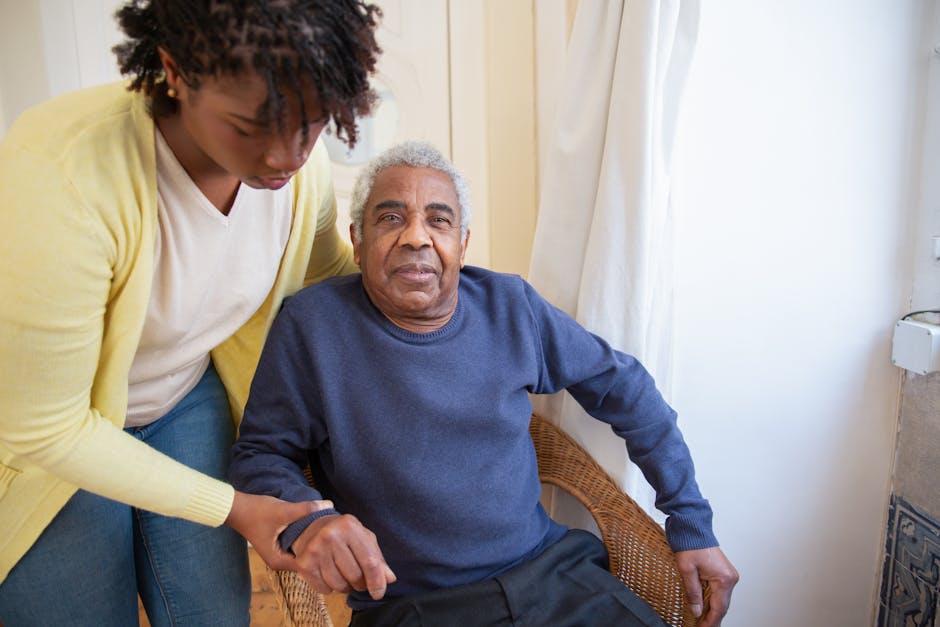
Locating a no-cost telephone reassurance program in your area takes just a few targeted inquiries. Because these services are organized locally, availability depends on your county, municipality, or state of residence.
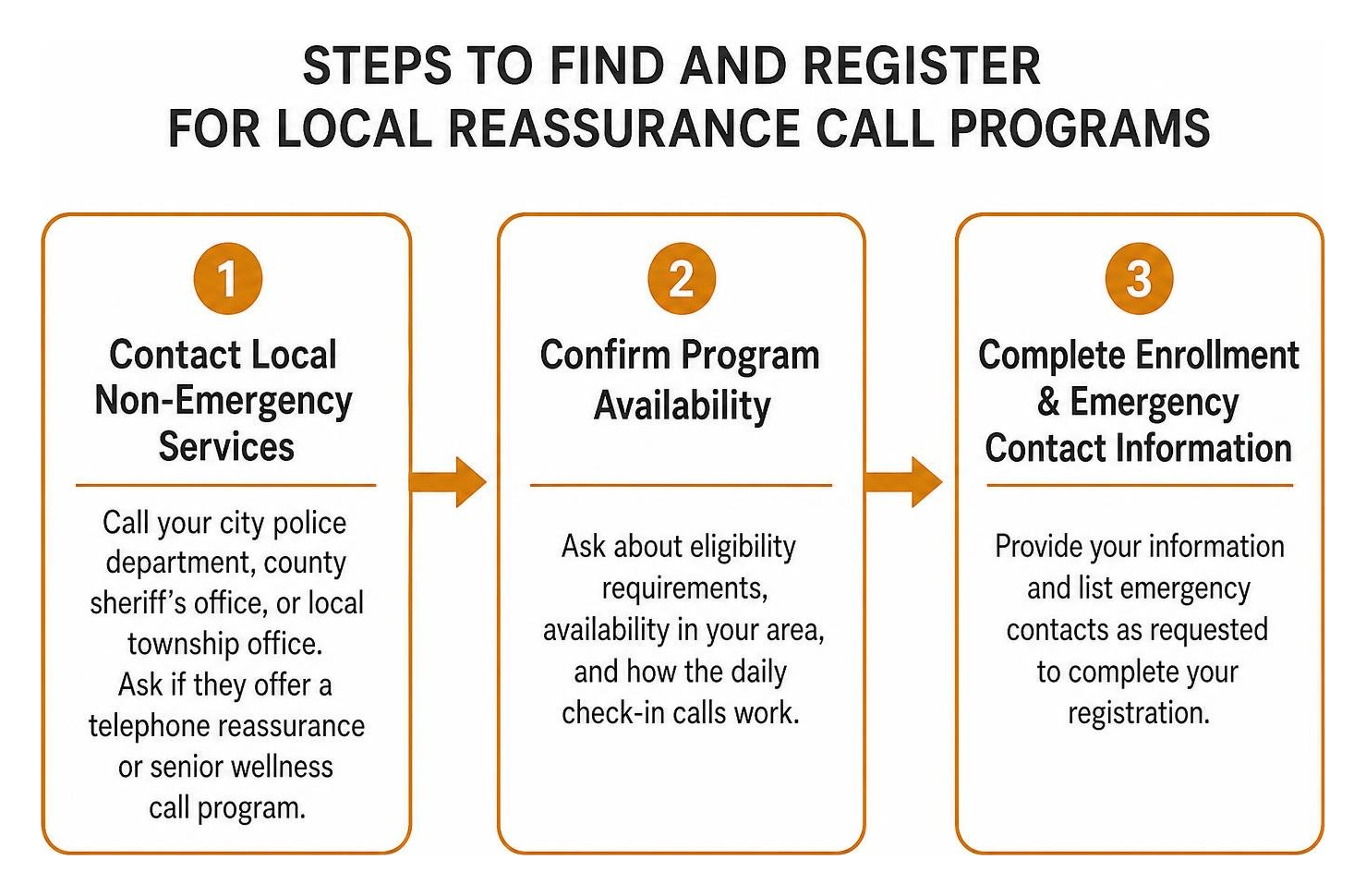
How to Sign Up for Free Daily Check In Calls for Seniors via Local Services
To establish free reassurance calls through a local municipal agency, follow these practical steps:
- Contact Your Local Non-Emergency Services: Call the non-emergency administrative phone line of your city police department, county sheriff’s office, or local township office. Ask directly if they maintain a telephone reassurance or senior wellness call roster.
- Consult Your Area Agency on Aging: Call the Eldercare Locator at 1-800-677-1116 to connect with your regional Area Agency on Aging. Ask their resource coordinators for any government-funded daily check-in call initiatives active in your zip code.
- Complete the Intake Application: When registering, you will provide essential details, including preferred daily call times, primary phone numbers (landline or cell), medical conditions, lockbox codes, and emergency keyholder contact numbers. If an unreturned call ever requires an in-person follow-up, having this information on file helps first responders. Reviewing our practical guide to requesting a senior welfare check online or by phone will give your family clear insight into how local agencies carry out these safety visits.
Key Features to Configure for Maximum Senior Safety
When setting up any daily check-in routine, families should configure the alert system to minimize false alarms while maintaining a reliable safety net. As detailed in our definitive guide to senior safety solutions, a structured escalation plan prevents missed calls from spiraling into unnecessary panic.
- Reasonable Call Retry Intervals: Make sure the system is configured to place 2 to 4 automated retry attempts across a 30-to-45-minute window before triggering emergency alerts. This gives your loved one time to finish a shower or step inside from watering the garden.
- Tiered Family Care Circles: Establish an escalation sequence that contacts primary family caregivers first via automated calls or text notifications before alerting secondary neighbors or local authorities.
- Consistent Scheduling: Align the daily check-in call with your parent’s natural morning routine, such as right after their morning coffee or breakfast.
Daily Check-In Calls and Emergency Response

A frequent question families ask is whether daily check-in calls replace wearable emergency pendants or 24/7 medical alert buttons. While both tools protect independent seniors, they serve distinct and complementary roles in a comprehensive care plan.
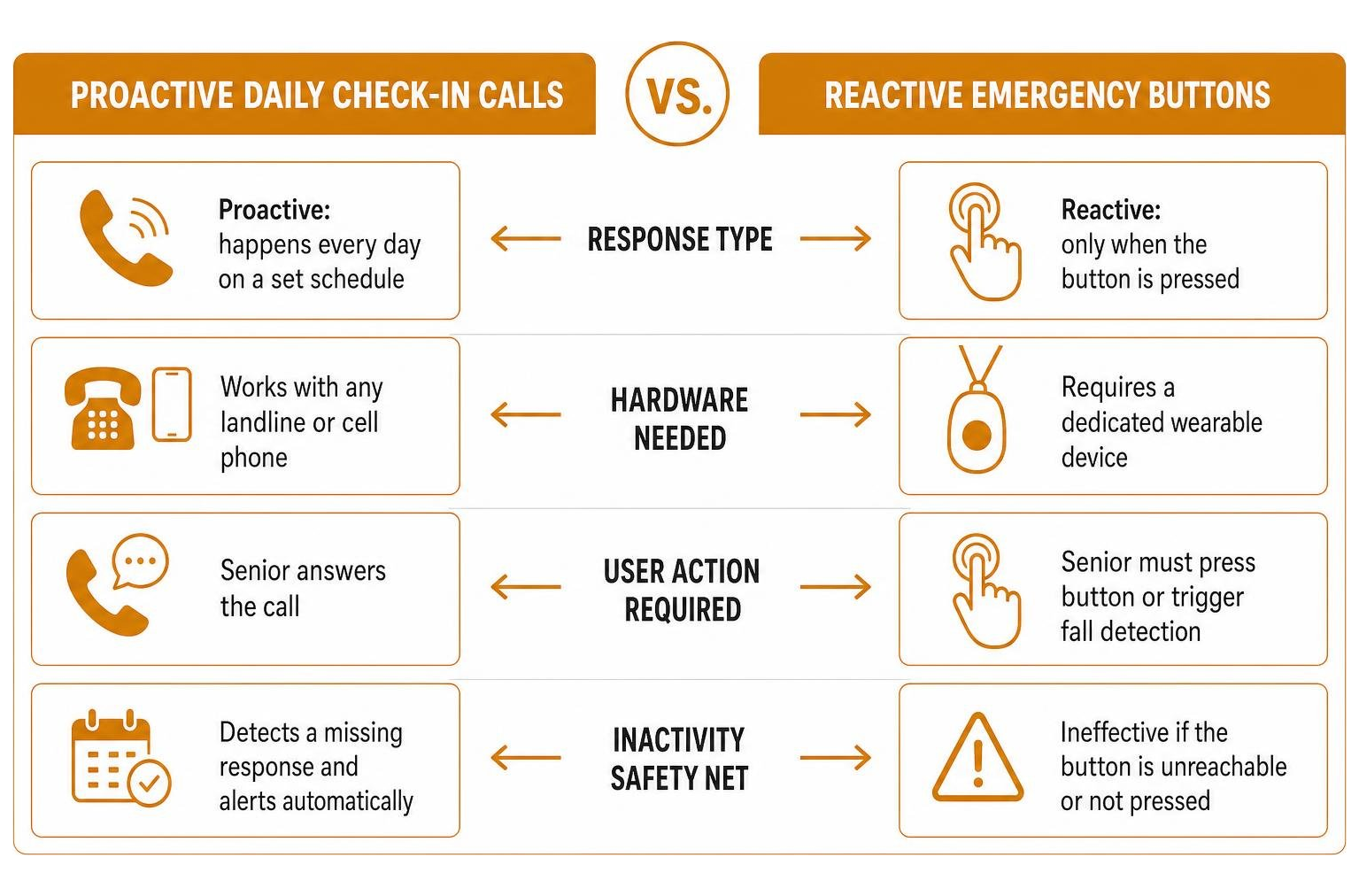
Medical alert systems are reactive: they require the individual to manually push a button or depend on automatic fall-detection sensors that can sometimes fail or be left on a nightstand. Daily automated check-in calls are proactive. They verify wellness on a fixed schedule every single day without requiring the senior to wear special hardware or remember charging cables.
To review an in-depth breakdown of how these technologies work together, explore our comparison on check-in calls vs a medical alert button.
Exploring Caregiver365 Automated Daily Monitoring
While free public programs provide an essential service, municipal coverage is not available in every county or township. When local agencies do not offer a reassurance service, or when families want greater flexibility, customization, and control, automated daily monitoring services fill the gap seamlessly.
At Caregiver365, we provide an automated daily phone check-in service built specifically to support independent seniors and give remote families complete peace of mind:
- Works on Any Phone: Our system works on standard landlines, flip phones, or smartphones with no hardware installation, Wi-Fi setups, or app downloads required for the senior.
- Expanded Care Circle: We notify up to eight family members, trusted neighbors, or caregivers simultaneously via automated calls, SMS messages, or email the moment a morning check-in is successfully completed or missed.
- Medical Alert Integration: Our platform integrates seamlessly alongside existing medical alert devices, providing an automated daily safety net that checks in even if a pendant is left on the dresser.
- Effortless Senior Interaction: Seniors simply answer the phone at their chosen time, listen to our friendly automated greeting, and press “1” to confirm they are doing well.
Learn more about how it works and see how simple daily safety monitoring can be for your family.
What to Do When Free Daily Check In Calls for Seniors Are Unavailable in Your Area
If your local police department or Area Agency on Aging does not operate a free phone reassurance program, your family can implement a reliable daily check-in routine using several straightforward approaches:
- Establish a Family Check-In Rotation: Divide daily morning check-in duties among siblings or extended family members. Assign specific days of the week to each person to ensure your loved one receives a daily phone call or text confirmation at a consistent time.
- Coordinate with Trusted Neighbors: Arrange a daily visual signal with a nearby neighbor, such as opening the front window blinds by 9:00 AM or retrieving the morning newspaper. If the blinds remain closed, the neighbor checks in directly.
- Use an Automated Reassurance Service: If busy work schedules or time zones make daily manual calling difficult, an automated check-in service like Caregiver365 ensures your parent receives their safety call every single day without fail, instantly looping your entire family into the results.
Frequently Asked Questions About Senior Check-In Calls
What happens if a senior misses a scheduled daily check-in call?
When an automated check-in call is not answered, the system does not immediately sound an alarm. Instead, it initiates a series of automatic retry calls over a set timeframe (usually 2 to 4 calls spaced 10 to 15 minutes apart). If the senior still does not answer after the final retry attempt, the system automatically alerts the designated family members in their Care Circle via phone call, text, or email so they can reach out directly.
Can a senior use a free check-in call service on a traditional landline?
Yes. The vast majority of municipal telephone reassurance programs and automated services operate over standard landline telephone connections as well as cellular phones. The senior only needs to pick up the handset when the phone rings and press a single number on their telephone keypad to confirm they are safe.
How do free community calls differ from automated safety check-in calls?
Free volunteer companionship calls focus on social engagement, conversation, and combating senior loneliness. These calls are typically scheduled once or twice a week and last between 15 and 30 minutes. Automated safety check-in calls, by contrast, occur every day at a fixed time, take less than 15 seconds to complete, and feature structured escalation protocols that notify family caregivers if an individual does not respond.
Conclusion
Aging independently at home is a goal shared by millions of older adults, and maintaining a consistent daily connection is key to making that possible. Whether you enroll in a free telephone reassurance program through your local police department, participate in a state aging initiative, or set up an automated calling platform, establishing a dependable daily check-in brings reassurance to older adults and their families.
Take a moment today to explore the reassurance services available in your parent’s community, or explore how daily check-in calls work to discover how simple it is to build a reliable safety circle for your family.