
Aging in Place Monitoring with Daily Phone Check-Ins
Start with a daily phone check-in your parent agrees to. Choose a time they can expect, decide who gets an alert if they do not answer, and make a plan for what that person will do next. A missed call is a reason to check in, not proof of an emergency.
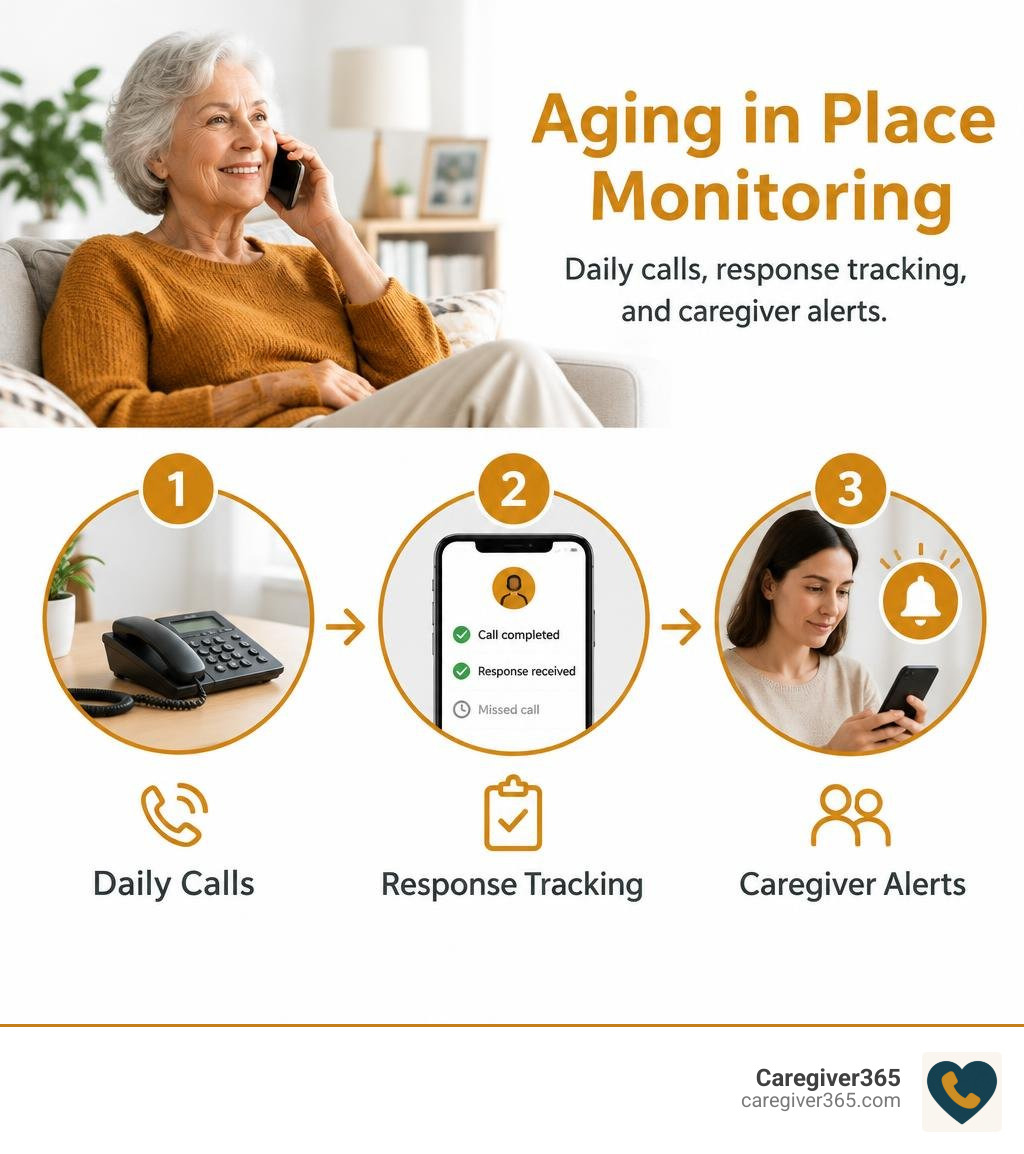
Effective aging in place monitoring gives someone living alone a simple way to confirm they are okay through a familiar daily call. Automated check-ins provide an effortless routine that fits naturally into a family’s existing support plan. If their health changes, you can adjust the check-in schedule together. It supports independence while giving family a clear next step when a call goes unanswered.
As of October 2026, 17.3% of the U.S. population is 65 and older (57.8 million individuals), and demographic trends indicate that 1 in 5 Americans will be 65 or older by 2030. Looking further ahead to 2050, that figure will reach 23%—roughly 82 million adults. Research shows that 77% of adults aged 50 and older want to remain in their homes for the long term.
However, only 10% of U.S. homes are currently equipped to accommodate aging adults, and one-third of adults over 50 recognize the need to modify their living environment. While investments in structural safety have a proven return—yielding $1.50 in reduced medical spending for every $1 invested for adults 75 and older—physical modifications only solve part of the equation. A dependable daily routine can help families stay connected without adding complicated equipment, ongoing maintenance, or privacy concerns.
How Scheduled Check-Ins Support Aging in Place
Families often need a reliable way to know when an older adult has started the day safely, especially when loved ones live separately. A simple scheduled check-in creates a predictable routine without requiring a complicated setup.

Scheduled phone check-ins fit into an older adult’s existing day-to-day routine rather than demanding continuous technical management. Exploring senior safety options can help families choose a practical approach that respects independence.
Understanding Non-Intrusive Check-In Options
Automated phone-based systems offer a practical, frictionless way to establish a daily safety routine. Calls reach seniors on their everyday landline or mobile device at a pre-selected time.
When the senior answers and confirms their status by pressing a single key, their safety circle receives peace of mind for the day. If a call is missed after repeated attempts, the system automatically alerts the designated family “Care Circle” of up to eight members, enabling immediate follow-up without relying on third-party call centers.
Addressing Privacy Concerns with Familiar Technology
A critical obstacle to home technology adoption is the fear of constant surveillance. Some older adults may be reluctant to adopt technology that feels intrusive or difficult to manage.
A scheduled phone call can support dignity and personal autonomy by using a familiar form of communication. Phone-based check-ins require no Wi-Fi setup or home modifications.
How Health Status Influences Acceptance and Check-In Plans
Acceptance of home safety technology is not static; it fluctuates directly with an older adult’s perceived health needs.
A study on passive home health monitoring revealed that older adults’ comfort with safety systems increases significantly when they are home alone (Odds Ratio = 1.46; p = 0.012) and rises even more when they are sick or recovering from an illness (OR = 2.21; p < 0.001).
When health status declines, families can combine proactive environmental steps—such as applying room-by-room fall prevention strategies—with increased check-in touchpoints.
Adjusting Check-Ins as Needs Change
A family’s check-in plan can change as an older adult’s needs change. During illness or recovery, a temporary increase in call frequency may provide reassurance and prompt follow-up when a scheduled call goes unanswered.
Scheduled telephone check-ins work wherever the older adult can answer their landline or mobile phone. This familiar routine offers a straightforward way to confirm well-being and support daily living routines without changing the home environment.
Data Sharing Preferences Across Care Circles
Older adults are selective regarding who sees their daily activity patterns. Data indicates that seniors are most willing to share wellness information on a regular basis with:
- Family Members: 81% willingness
- Healthcare Providers: 80% willingness
Willingness to share data increases to 71% across other secondary support networks during acute illness. Understanding the core reasons to check in regularly helps families establish transparent communication boundaries, ensuring older adults feel supported rather than scrutinized.
How to Implement an Unobtrusive In-Home Monitoring Plan
Establishing a dependable safety network does not require complicated technical installations or expensive contractors.
By following the systematic process outlined in how daily check-in calls work, families can deploy a comprehensive plan in four simple steps:
- Establish a Predictable Call Window: Select a daily time slot aligned with the senior’s natural routine (e.g., 9:00 AM after morning tea).
- Set Up the Contact Chain: Designate up to eight family members, trusted neighbors, or primary caregivers within the Care Circle who receive notifications.
- Define an Escalation Protocol: Agree on immediate verification steps if a check-in is missed (e.g., primary contact calls back, secondary contact visits the residence).
- Review the Plan Regularly: Revisit the call schedule and contact chain whenever health needs or family availability changes.
Designing Flexible Aging in Place Monitoring for Changing Health Needs
Health trajectories change over time. A senior managing seasonal flu or recovering from outpatient surgery may require two to three daily check-ins (morning, midday, and evening). Once baseline mobility returns, the schedule can adjust back to a single morning call. Because telephone check-in services require no physical hardware adjustments, these transitions occur seamlessly through software settings without disturbing the home environment.
Balancing Automated Checks and Direct Family Support
While automated services ensure consistent daily contact, they are designed to support personal family relationships, not replace them. Automated check-ins handle routine verification, removing the daily friction of “checking up” on aging parents and reducing caregiver burnout.
When an unexplained absence or missed call pattern emerges, family members can follow the escalation steps they agreed on in advance, such as calling back or asking a trusted local contact to check in or reviewing when further assistance may be needed.
Frequently Asked Questions About Home Health Monitoring
How do daily phone check-ins support independent living?
Daily automated check-ins give older adults a simple, predictable way to confirm they are okay. A comparison of check-in approaches can help families understand how a scheduled call supports their daily plan. When a scheduled call goes unanswered, the designated Care Circle receives an alert and can follow the family’s agreed follow-up plan.
What are the biggest privacy barriers for seniors adopting home monitoring?
The primary barriers are concerns about privacy, complicated technology, and losing independence. Voice-based phone check-ins use familiar household technology and give older adults a straightforward way to participate in their own daily safety routine.
How do check-in needs change when an older adult becomes ill?
During illness or post-hospitalization recovery, fall risks and sudden health declines increase significantly. Studies show older adults are over three times more receptive to heightened monitoring during these periods. Families can temporarily increase daily check-in frequencies to provide closer oversight, returning to standard once-daily schedules once health stabilizes.
Conclusion: Empowering Independence with Non-Intrusive Care
Seniors do not have to choose between their personal independence and their family’s peace of mind. By leveraging simple, privacy-preserving solutions, families can create a dependable safety network without adding complicated technology to the home.
Explore how automated daily phone check-ins provide continuous care circle awareness while preserving the comfort, autonomy, and dignity of aging in place.
References
Kim D, Bian H, Chang CK, Dong L, Margrett J. “In-Home Monitoring Technology for Aging in Place: Scoping Review..” Interactive journal of medical research, 2022. PMID 36048502.