
How Landline Medical Alert Systems Work for In-Home Safety
Understanding how a wired system protects a household is straightforward. While modern cellular gadgets rely on cellular towers and data plans, traditional units use the physical telephone infrastructure already wired into the residence. This setup creates a dedicated emergency lifeline that does not depend on broadband routers, Wi-Fi passwords, or cellular tower reception.
To build a truly secure environment, families often explore comprehensive senior safety solutions that combine physical hardware with clear emergency protocols. When evaluating wired options, the communication chain relies on simple, proven hardware engineered to connect with professional help in seconds.
Core Hardware in Landline Medical Alert Systems
Every traditional home system consists of two primary hardware components:
- The Base Station Console: This unit plugs directly into an existing telephone wall jack and a standard electrical outlet. It houses a powerful microphone, a high-output two-way loudspeaker, the primary dialing processor, and an internal rechargeable backup battery.
- Wearable Help Transmitters: Users carry an ultra-lightweight, wireless radio frequency (RF) button worn as a necklace pendant, a wristband, or placed on high-risk surfaces as wall-mounted buttons.
These wearable transmitters use low-frequency radio waves to communicate directly with the base receiver. Because the button only needs to transmit an RF pulse rather than stream heavy voice data, its internal battery lasts between two and three years without needing nightly recharging. Comparing the durability and reach of these transmitters is essential when reviewing top home care call buttons comparing range and reliability.
Signal Transmission and Emergency Dispatch Protocol
When an emergency happens, the alert process follows a precise sequence designed to get assistance on site immediately:
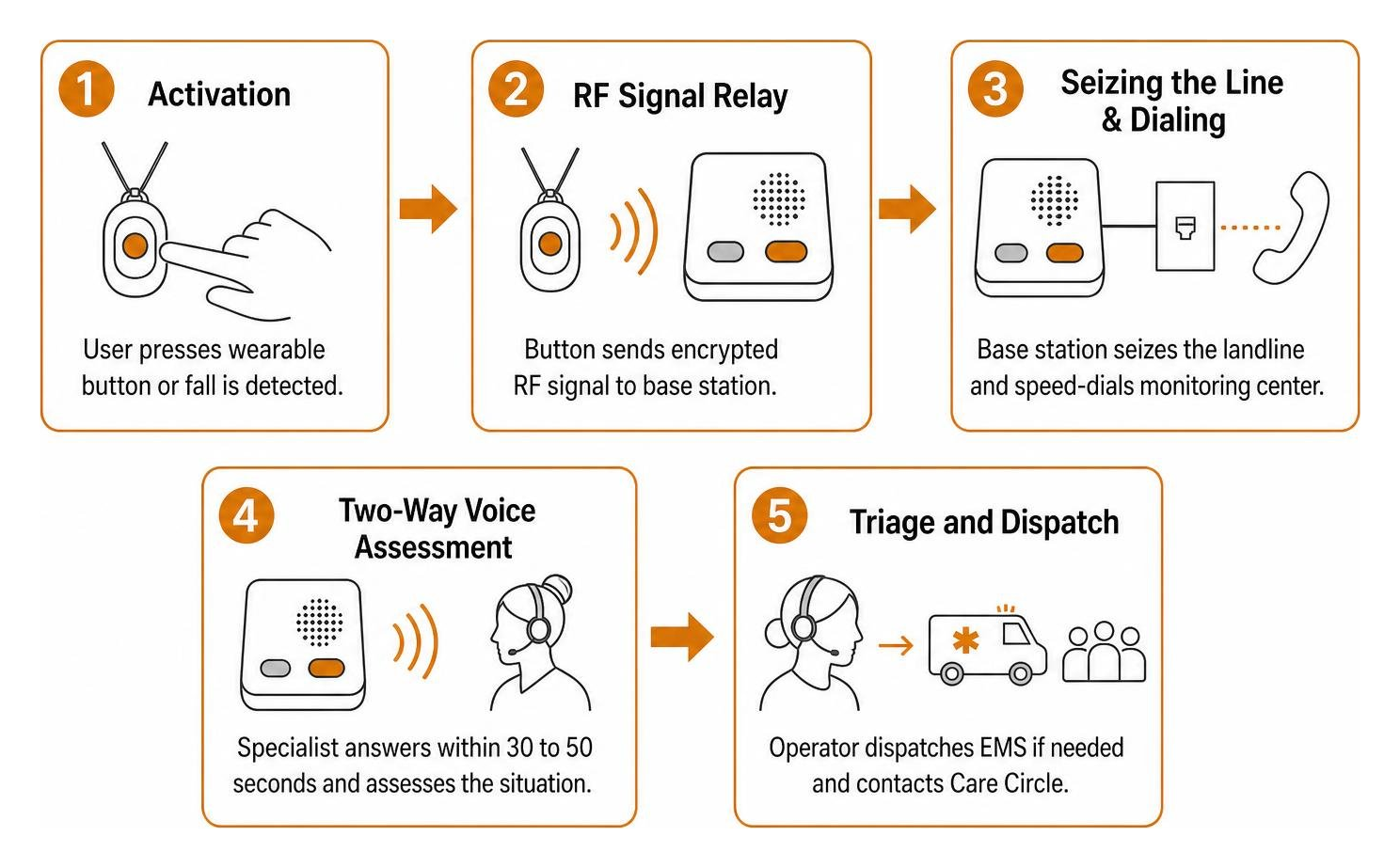
- Step 1: Activation. The user presses their wearable transmitter or a built-in accelerometer registers a hard fall.
- Step 2: RF Signal Relay. The button broadcasts an encrypted radio frequency signal to the base station console.
- Step 3: Seizing the Line & Dialing. The base station automatically seizes the landline—disconnecting any ongoing phone conversation—and speed-dials the 24/7 monitoring center.
- Step 4: Two-Way Voice Assessment. A trained emergency response specialist answers within 30 to 50 seconds through the base console’s loudspeaker, assessing the user’s situation and condition.
- Step 5: Triage and Dispatch. If the user requests help, cannot respond, or confirms an injury, the operator immediately dispatches local emergency services (EMS) and contacts the pre-designated family Care Circle.
For more information on how these systems compare to other options, see medical alert systems.
Key Features to Evaluate in Traditional In-Home Units
Not all wired consoles are created equal. When reviewing options, evaluating core technical specifications ensures the chosen hardware fits the specific floor plan and daily habits of the user. For a broader overview of home safety criteria, our senior care resource guides cover additional environmental modifications and planning strategies.
Coverage Range for Landline Medical Alert Systems
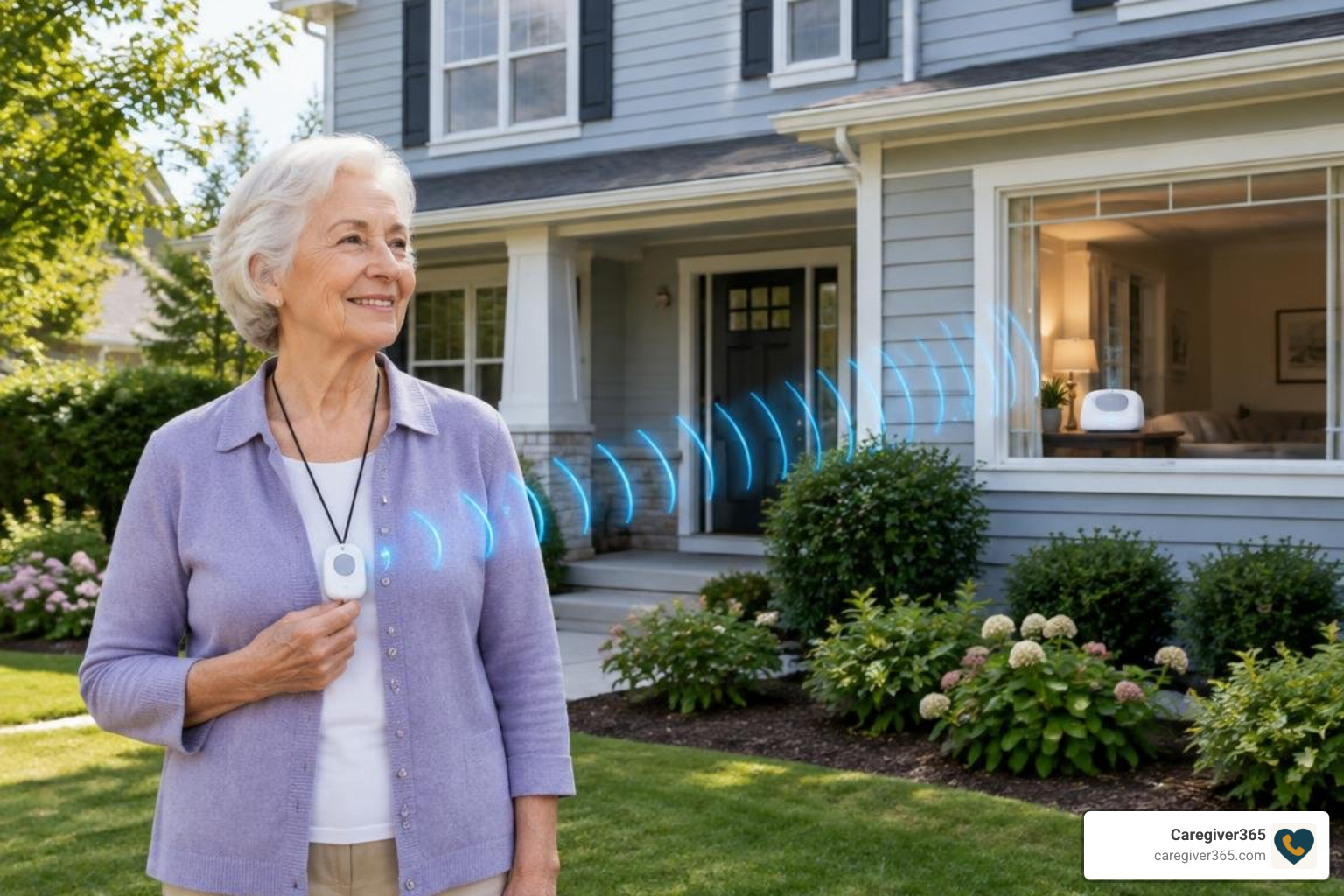
The transmission distance between the wearable button and the base receiver determines how freely an older adult can move around their property while remaining protected.
- Standard Coverage (600 to 800 Feet): Ideal for single-story apartments, condominiums, and smaller ranch-style homes. An 800-foot radius covers approximately two and a half football fields, which comfortably spans interior living spaces, attached garages, and small patios.
- Extended Coverage (1,300 to 1,400 Feet): Designed for multi-story residences, properties with dense construction materials (such as brick, stone, or metal framing), and homes with expansive yards or detached workshops. A 1,300-foot range covers roughly three football fields, ensuring that stepping out to check the mailbox or tend to a garden does not leave someone stranded outside signal reach.
Power Outage Protection and Battery Redundancy
Severe storms and electrical grid failures are precisely when slip-and-fall accidents are most likely to occur. Traditional alert systems address this risk through dual-layer power redundancy:
- 32-Hour Base Battery Backup: When municipal power fails, the base console automatically switches to an internal rechargeable backup battery, maintaining continuous monitoring for up to 30 to 32 hours.
- Constant Telephone Line Voltage: Traditional copper landlines carry their own low-voltage electrical current independent of the electric grid. As long as the physical phone line remains intact, the system can dial out during a blackout without relying on household electrical outlets.
- Supervised Wearable Batteries: The transmitter buttons use sealed, long-life lithium batteries that operate for several years. The base console periodically runs automated diagnostic checks, alerting the monitoring center when a button’s power runs low so a replacement can be mailed out proactively.
Comparing In-Home Landline Options vs. Modern Alternatives
Selecting the right safety solution requires balancing physical living conditions, local telecom infrastructure, and budget requirements.
| Feature / Metric | Traditional Landline Systems | Cellular In-Home Systems | Proactive Automated Check-In Services |
|---|---|---|---|
| Primary Connection | Physical telephone line (POTS/DSL) | Built-in 4G/5G cellular module | Any existing landline or mobile phone |
| Hardware Required | Base console + wearable button | Base console + wearable button | None (uses existing home phone) |
| Average Monthly Cost | $24.95 – $29.95 / month | $32.95 – $39.95 / month | Starting under $15.00 / month |
| Upfront / Activation Fees | $0 – $99.95 (varies by provider) | $0 – $50.00 | $0 |
| Power Outage Resilience | 30–32 hour backup + phone line voltage | 24–30 hour backup battery | 100% cloud-based (unaffected by home outages) |
| Coverage Area | In and around the home perimeter | In-home or nationwide (mobile units) | Anywhere phone service exists |
| Fall Detection Option | Yes (approx. $5 – $10 / month add-on) | Yes (approx. $10 / month add-on) | N/A (proactive wellness verification) |
| Best Suited For | Rural areas, poor cellular coverage, low tech | Suburban homes with strong cellular reception | Daily routine confirmation & isolation prevention |
Explore our comprehensive side-by-side safety comparison for detailed feature breakdowns across modern safety technologies.
Landline Reliability vs Cellular Coverage Gaps
While cellular consoles offer mobility, they depend entirely on local tower density. In rural, mountainous, or heavily wooded regions, cellular signals can drop unpredictably inside homes with thick plaster, concrete foundations, or metal roofs. A wired home phone line provides stable, hardwired communication that does not fluctuate with regional network congestion or weather-related signal attenuation.
Emergency Response Buttons vs Scheduled Verification
Wearable alert hardware serves as a reactive safety net: it works only if the senior is wearing the button, is conscious, and can activate it (or triggers an automated fall sensor).
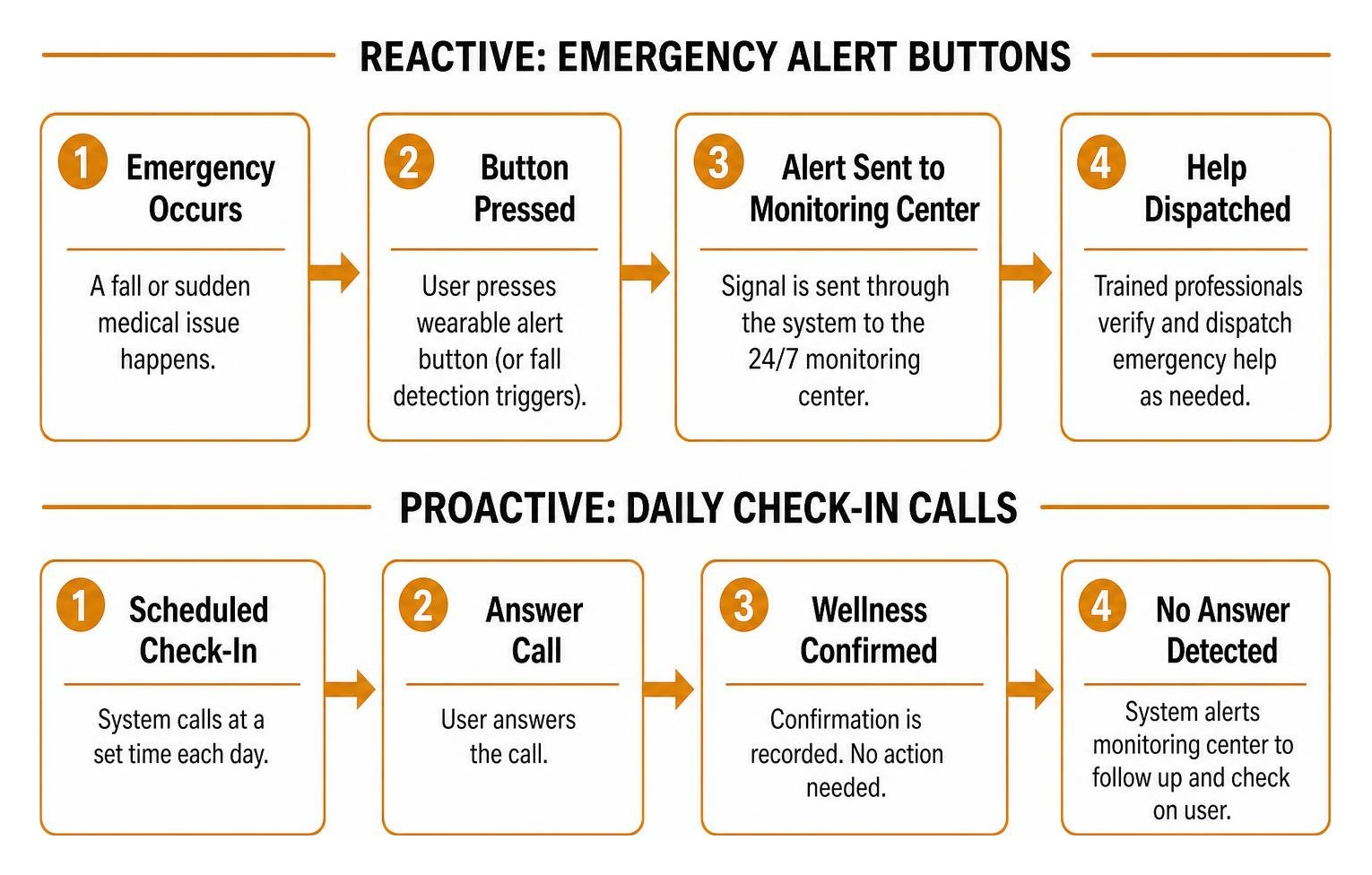
By contrast, proactive wellness verification solves a completely different challenge. Many families choose to balance reactive hardware with automated wellness calls. Our breakdown of scheduled check-in calls vs wearable medical buttons details how combining both creates a comprehensive safety net: the button handles sudden emergencies, while daily check-ins ensure that a parent who is unable to reach their device is never left unattended for days.
Frequently Asked Questions About Landline Alert Devices
Do landline medical alert systems work during a power failure?
Yes. Quality home consoles feature an integrated backup battery providing between 30 and 32 hours of continuous operation during a blackout. Because landline telephone connections operate on independent low-voltage line power supplied by the telecom provider, the base unit can continue to place emergency calls even when the home’s main circuit breakers have tripped.
Can wearable alert buttons be used in the shower?
Yes. The wearable pendants and wristbands included with landline systems carry water-resistant or waterproof IPX7 ratings. They are fully safe to wear in the shower, bath, or outdoors in heavy rain. Because a significant percentage of senior falls occur on wet bathroom tiles, keeping the button on while bathing is strongly recommended.
Can multiple people share a single landline base console?
Yes. Most wired base stations can pair with multiple transmitters simultaneously. Spouses or roommates living in the same home can each wear their own pendant or wristband linked to a single central base console, often for a nominal one-time button fee or a small monthly add-on.
Conclusion
Traditional wired alert devices continue to deliver unmatched dependability for seniors aging in place in rural settings, older homes, or neighborhoods with poor cellular reception. With robust 32-hour battery backups, broad signal ranges up to 1,300 feet, and no cellular dead zones to worry about, they offer dependable peace of mind at an affordable monthly rate.
True peace of mind, however, works best in layers. While a wearable button provides immediate access to emergency personnel during a sudden fall, proactive daily communication ensures ongoing safety, routine monitoring, and emotional connection. Learn how Caregiver365 home safety support provides automated daily check-ins that work seamlessly across any landline or mobile phone, keeping families connected and seniors thriving independently.