
Turn Every Unanswered Call Into a Fast Family Alert
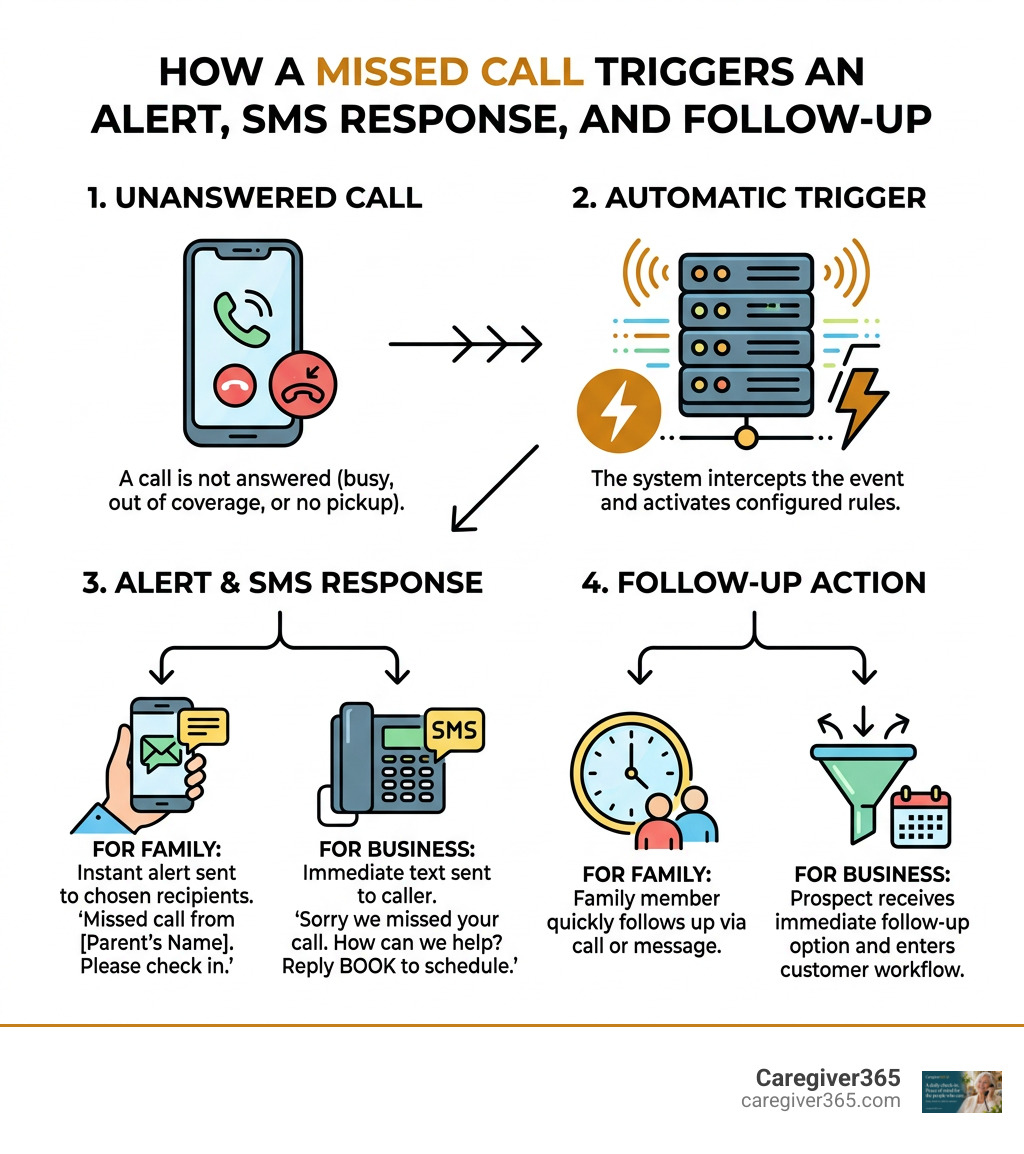
A miss call alert service helps you act when a call is not answered. Set up a dedicated number or call-forwarding rule, choose who should receive the alert, and trigger an automatic SMS or callback message. For an older adult living alone, this can give family members a simple, low-tech way to see that an important call was missed and follow up quickly.
For local service businesses, the same system stops leads from disappearing after hours. The platform captures the caller’s number, logs it, and can send an instant text such as, “Sorry we missed you. Reply BOOK to schedule.”
The key is speed. A missed call is often a short window of intent – whether it is a customer seeking help or a family member checking on a parent. Automated SMS alerts create a clear next step without requiring an app, smartphone skills, or someone watching the phone all day.
At Caregiver365, missed-call automation can support reliable family communication by turning an unanswered call into a prompt notification and follow-up workflow.
What Is a Miss Call Alert Service and How Does It Work?
At its core, a missed call alert system bridges the gap between an unanswered phone call and an immediate follow-up. When someone dials a number and the call cannot connect—because the line is busy, the phone is switched off, the user is out of network coverage, or no one picks up—the system intercepts that event at the telecom level.
The underlying mechanics rely on cellular signaling and cloud telephony protocols. In traditional telecom setups, when a call goes unanswered, the carrier’s Home Location Register (HLR) and Mobile Switching Center (MSC) register the failed call attempt. Instead of letting that data vanish into the ether, an MCA (Missed Call Alert) framework captures the Caller Line Identification (CLI), timestamps the event, and stores it in an alert queue.
In modern business environments, cloud platforms take this a step further. When a caller dials a dedicated virtual number, the cloud telephony switch detects the incoming ring, captures the caller ID, and immediately drops the call before it connects (avoiding airtime charges). This instant event triggers an automated webhook, which sends an SMS, pushes data to a CRM, or notifies a team in real time.
| Feature / Metric | Carrier MCA Systems | Mobile Alerting Apps | Business Text-Back Automation |
|---|---|---|---|
| Primary Architecture | Telecom switch / HLR-level signaling | Device call log listener & call forwarding | Cloud telephony virtual numbers & Webhooks |
| Hardware / App Required | None (Network-native) | Mobile app installed on device | None (Cloud-hosted dashboard/API) |
| Hardware Compatibility | Landlines & any mobile phone | Smartphones only (Android/iOS) | Works with all caller devices |
| Notification Method | SMS when phone reconnects | In-app push notification / local SMS | Automated SMS, WhatsApp, Webhooks, CRM alerts |
| Primary Use Case | Personal connectivity & network coverage | Low-cost call tracking & call screening | Lead generation, customer support & 2FA verification |
| User Friction | Zero (Carrier-managed) | Requires app installation & setup | Zero (Caller just dials and disconnects) |
Understanding the Core Architecture of a Miss Call Alert Service
The operational pipeline follows a reliable sequence designed for high-availability environments. Whether managing a local service business or coordinating wellness updates, how our communication systems operate illustrates that simplicity on the user end requires robust automation behind the scenes.
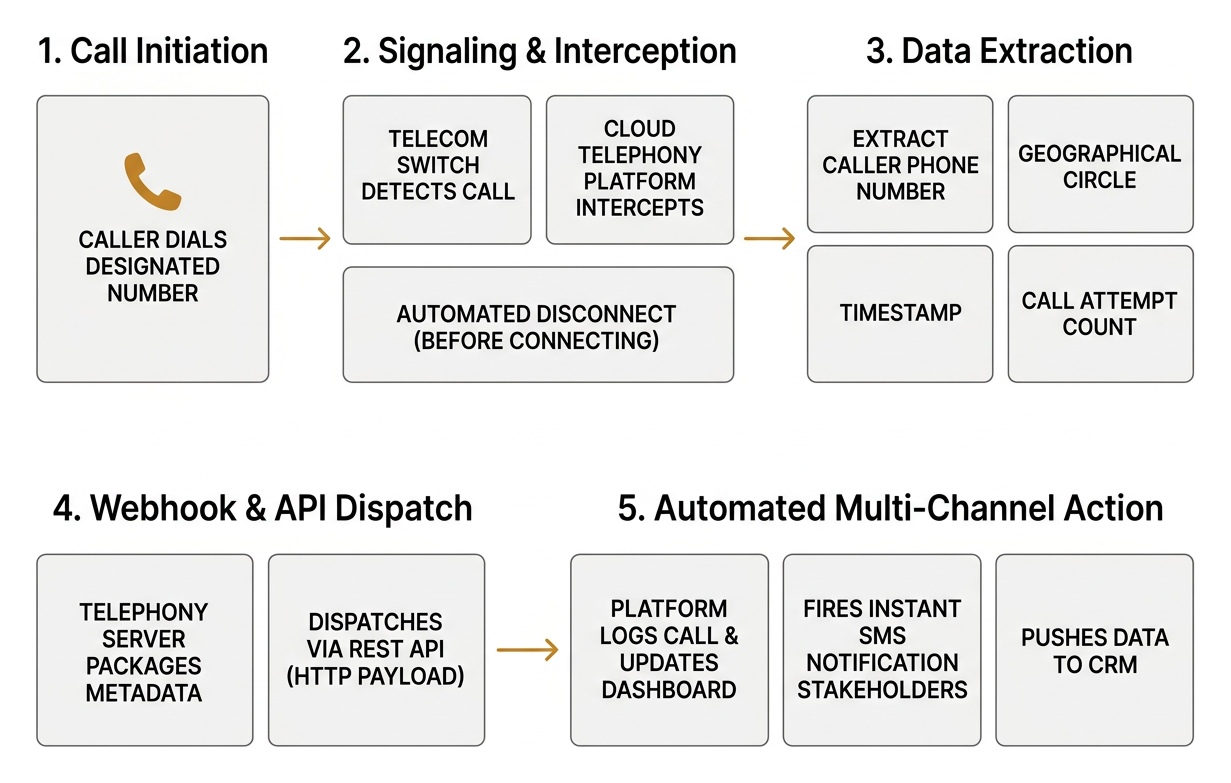
- Call Initiation: The caller dials a designated standard, toll-free, or virtual number.
- Signaling & Interception: The telecom switch detects the call. If configured for automated verification or lead capture, the system triggers a disconnect before billing begins. If configured for network alerts, the carrier detects an unreachable status.
- Data Extraction: The system extracts the caller’s phone number, geographical circle, timestamp, and call attempt count.
- Webhook & API Dispatch: The telephony server packages this metadata into an HTTP payload and dispatches it via REST API.
- Automated Multi-Channel Action: The recipient platform logs the call, updates the central dashboard, and fires an instant SMS or app notification to the designated stakeholders.
Carrier Networks vs. Cloud-Based Call Forwarding
Carrier-level systems and cloud-based call forwarding serve distinct needs:
- Carrier-Based MCA: Built directly into the telecom infrastructure. If your phone battery dies while running errands, your carrier queues the missed call data. Once your SIM card reconnects to a cellular tower, the carrier’s SMS center (SMSC) pushes a summary text listing all numbers that tried reaching you.
- Cloud Forwarding & Conditional Divert: Operates independently of local SIM status. Users can set conditional rules (such as “Divert if Busy” or “Divert if Unreachable”) pointing to a central routing number. For example, Prepaid telecom call divert options route calls to designated platform numbers, allowing automated software to handle the notification flow without hardware dependencies.
Types of Missed Call Notification Solutions
Missed call notification tools fall into three distinct categories based on deployment, cost, and target audience.
Carrier-Provided MCA and USSD Alerts
Telecom operators across the globe offer native Missed Call Alerts as a core value-added service. These solutions operate entirely on the carrier’s network:
- USSD Management: Users activate or deactivate services using short codes (e.g., dialing
*612#,*1400#, or*121#). - Zero App Dependency: Works on basic 2G feature phones, modern smartphones, and landline routing setups.
- Reconnection Broadcasts: Delivers a consolidated SMS summary once a subscriber re-enters coverage or powers on their device.
Mobile Apps and Automated Text-Back Software
For individual users seeking customized alerts on their personal devices, app-based utilities offer direct smartphone integration. Tools such as the Missed call notification utility on Google Play track incoming call states and dispatch local push alerts.
Leading software solutions prioritize user privacy by processing call logs locally and utilizing SHA-224 cryptographic hashing, ensuring phone records are not stored on unencrypted third-party servers.
Choosing the Right Miss Call Alert Service for Business Growth
For growing organizations, choosing a notification tool comes down to integration depth, speed, and reliability. When evaluating providers, compare reliable alert setups to ensure your infrastructure supports high-volume spikes, multi-channel messaging (SMS, WhatsApp, voice call-backs), and enterprise CRM synchronization.
Business Lead Capture and Verification Capabilities
For local service businesses, missed calls represent lost revenue. When an interested customer calls an HVAC technician, plumber, or medical clinic and gets voicemail, they rarely leave a message—they hang up and call the next business on the search results page.
Instant SMS Text-Back and After-Hours Lead Routing
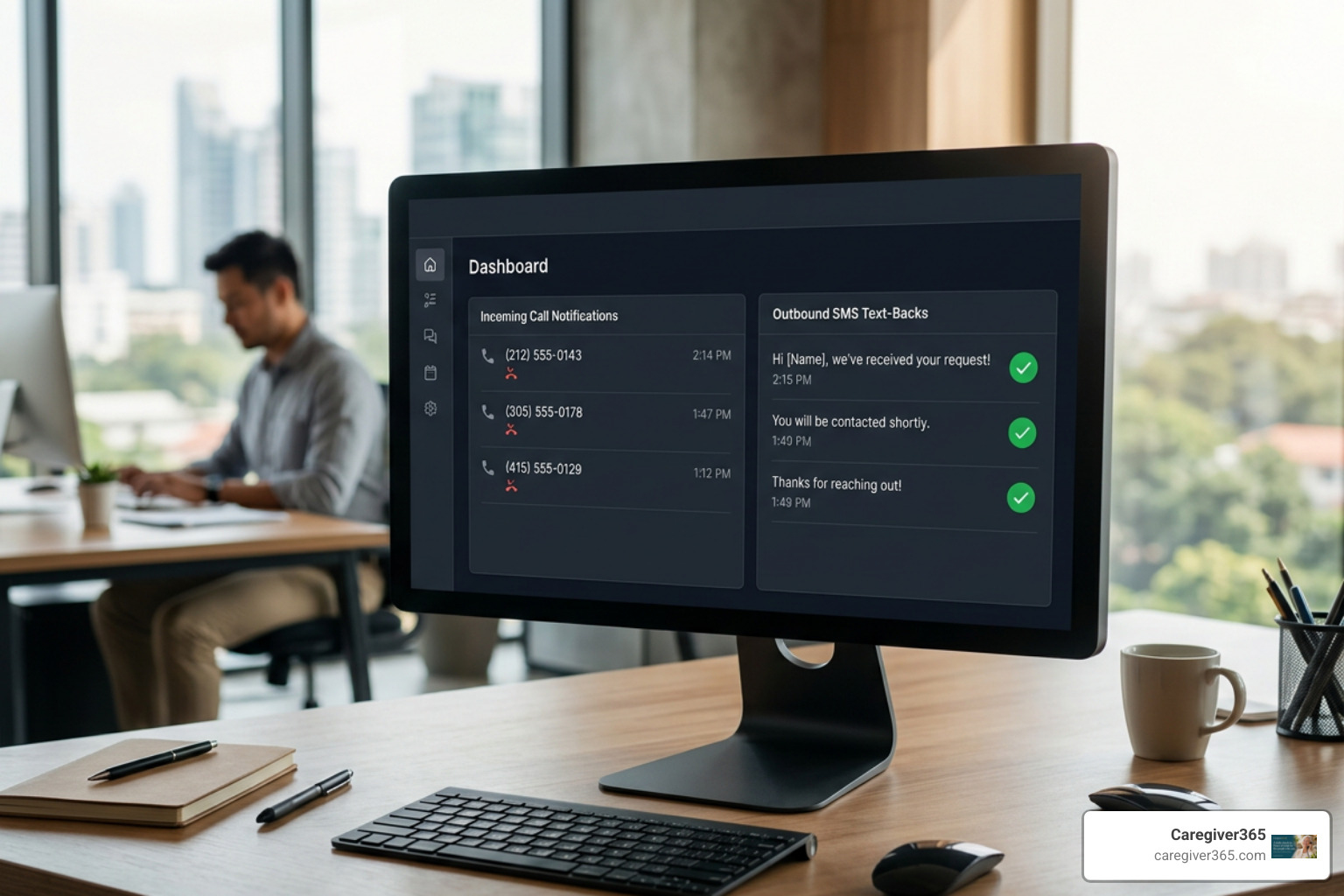
Implementing a sub-5-second automated text-back system captures prospects before they contact a competitor. Platforms like Missed Call Text Back Automation for Local Service Businesses show that responding within seconds keeps prospective buyers engaged.
Key components of modern text-back systems include:
- Sub-5-Second Response Times: Instantly acknowledging the caller’s request via automated SMS while their purchase intent is highest.
- A2P 10DLC Compliance: Registering Application-to-Person messaging campaigns with telecom carriers to ensure high deliverability and avoid spam filters.
- Interactive Keywords: Allowing prospects to reply with simple words like “BOOK” or “HELP” to receive automated calendar links or service menus.
- Smart Rep Routing: Automatically forwarding the captured lead data to the on-duty staff member’s mobile phone for immediate personal follow-up.
Missed-Call Verification as an Alternative to OTP
Beyond lead capture, missed calls provide a frictionless alternative to SMS-based One-Time Passwords (OTP) for user authentication and two-factor authentication (2FA). Providers like Missed Call Service Delhi NCR and cloud platforms like Miss Call, Miss Call API, MCA, CBS deploy this technology across major global markets.
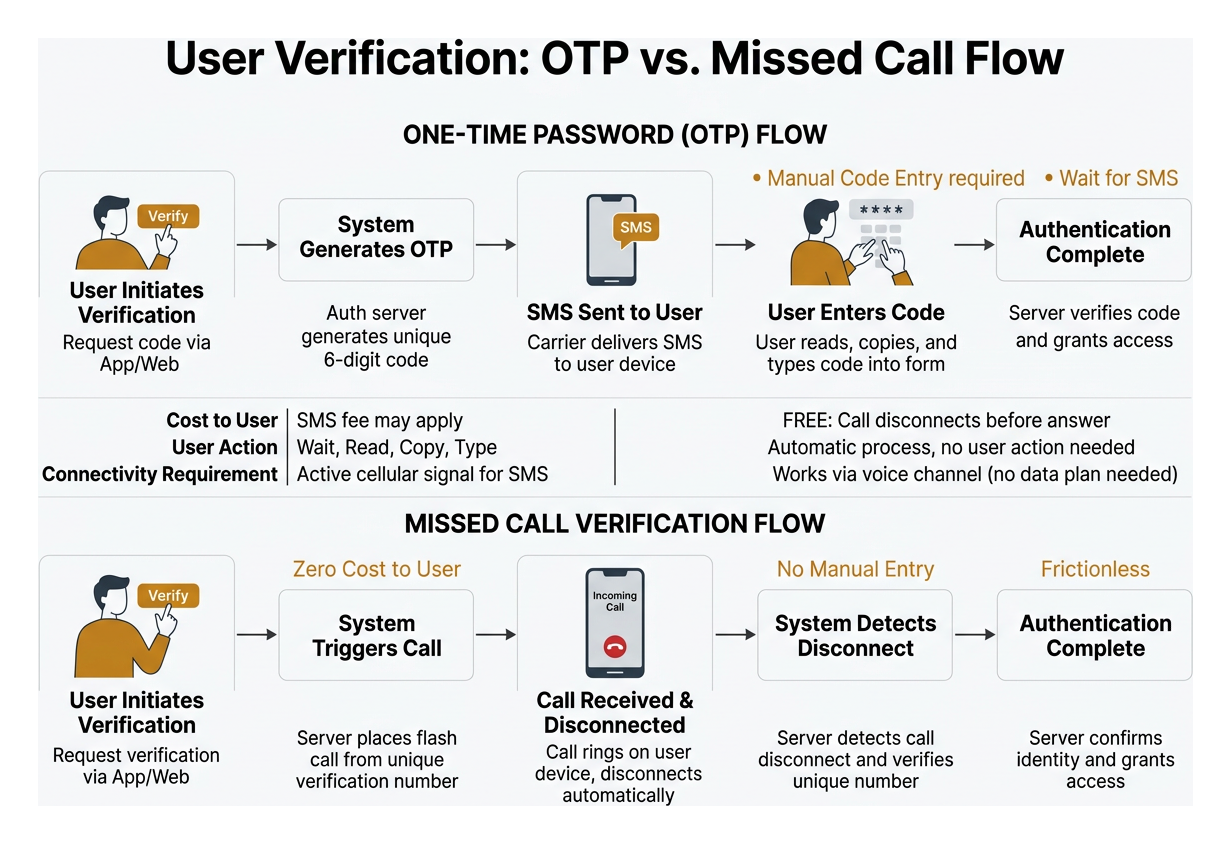
- Zero Cost to the User: Because the call disconnects before answering, the user incurs no airtime or SMS fees.
- No Manual Code Entry: The user does not need to wait for an SMS code to arrive, copy it, and type it into a form. The system authenticates the user automatically upon detecting the disconnect.
- High Reliability in Low-Bandwidth Areas: Missed-call verification functions over voice channels without requiring an active mobile data plan, making it effective in emerging markets and rural areas.
Technical Setup, Pricing Models, and Practical Limitations
Deploying a missed call alert framework requires balancing budget considerations against telecom network constraints.
Cost Breakdown: From Free Carrier Add-Ons to SaaS Subscriptions
Pricing varies significantly depending on whether the service is carrier-native, consumer-app-based, or enterprise cloud software:
- Free Carrier Services: Many mobile operators (including MTN Nigeria, Nepal Telecom, and my.t Mauritius) provide MCA free of charge to all prepaid and postpaid subscribers.
- Nominal Carrier Fees: Some operators charge a small daily or monthly fee (for instance, Jazz Pakistan charges Rs. 3.20/day, while Grameenphone charges BDT 10/month for prepaid users).
- Consumer Utility Apps: Typically available as free downloads, with ad-free premium tiers available for a nominal annual subscription (around $0.99/year).
- Business Cloud Telephony: Pricing models typically include a dedicated virtual number rental fee ($5 to $25/month) combined with pay-as-you-go SMS and API trigger fees ($0.01 to $0.03 per automated text-back).
Overcoming Limitations: DND, Roaming, and Private Numbers
While missed call alert systems are robust, they operate under specific telecommunications rules:
- Private & Hidden Numbers: If a caller disables their caller ID or dials using an unlisted private number, the system cannot capture the CLI, preventing automated SMS alerts.
- Do Not Disturb (DND) Registries: Regulatory bodies enforce strict DND lists. Automated marketing text-backs cannot be delivered to registered numbers without prior transactional opt-in compliance.
- International Roaming Blocks: Traditional carrier-level MCA notifications often fail when a subscriber is roaming on foreign networks due to signaling incompatibilities between international MSCs.
- Line Suspension: If a subscriber’s SIM card is barred, suspended, or has insufficient prepaid validity, carrier-level MCA features will stop functioning until account standing is restored.
Frequently Asked Questions About Missed Call Alerts
Will a caller be charged when triggering a missed call alert?
No. In dedicated cloud-based missed call systems, the telephony switch disconnects the incoming call during the signaling phase before a voice channel is opened. Because the call is never technically answered, telecom operators do not bill the caller.
How fast does an automated missed call text-back system engage prospects?
Cloud-based systems process incoming call events and trigger outbound SMS webhooks within 2 to 5 seconds. This near-instant engagement reaches the customer while they still have their phone in hand, preventing them from calling a competing service provider.
What permissions and privacy settings are required for alert apps?
Mobile apps installed on personal smartphones require permissions to read call logs and state changes (READ_CALL_LOG and READ_PHONE_STATE). Reputable utilities do not upload personal contacts to cloud servers; they process the numbers locally on the device using encryption and SHA hashing to safeguard user data.
Conclusion
Whether preventing business lead loss or staying connected with loved ones, automated missed call alerts turn an unanswered ring into an immediate, reliable next step. By removing the need for manual monitoring and working seamlessly across standard landlines and mobile phones, missed call automation provides a dependable communication safety net.
At Caregiver365, we use automated communication loops to give families peace of mind. Discover how daily check in calls work to keep loved ones safe, connected, and supported every single day without complicated hardware.